
Gut Health
Probiotics and Immunity: Separating the 70% Gut-Immune Claim from the Evidence
Where the famous "70% of your immune system is in your gut" line comes from, what gut microbes really do for your defences, and what trials of immune probiotics actually show.
Why so many people search for immune probiotics
Every cold season, searches for "immune probiotics", "probiotics immune support" and "do probiotics boost immunity" rise. Shop shelves answer with bottles promising an "immune booster" and labels that say "immune active". Behind most of these promises sits one famous sentence: "70% of your immune system lives in your gut." If that is true, the thinking goes, feeding the gut good bacteria must strengthen your defences.
This article tests that chain of reasoning one link at a time. The short version: the gut immune system connection is real and fascinating, but the leap from "lots of immune tissue in the gut" to "a probiotic boosts immunity" is where the evidence thins out.
First, what is a probiotic?
An international panel of scientists, the International Scientific Association for Probiotics and Prebiotics (ISAPP), defines probiotics as "live microorganisms that, when administered in adequate amounts, confer a health benefit on the host" [1]. In plain words: living microbes that do you some good when you take enough of them. The panel noted that a few benefits may be shared across well-studied species, but many effects belong to specific strains, the individual types within a species. So a benefit shown for one probiotic cannot simply be assumed for another [1].
Where does the "70% of the immune system is in the gut" claim come from?
Your gut lining is the biggest surface where your body meets the outside world. Every meal brings in food, along with bacteria and viruses. So the gut is packed with immune tissue called gut-associated lymphoid tissue (GALT). "Lymphoid" simply means made of lymphocytes, the white blood cells that recognise germs and make antibodies (defence proteins that latch onto invaders). GALT includes small patches of immune cells in the wall of the small intestine and immune cells scattered along the whole gut lining.
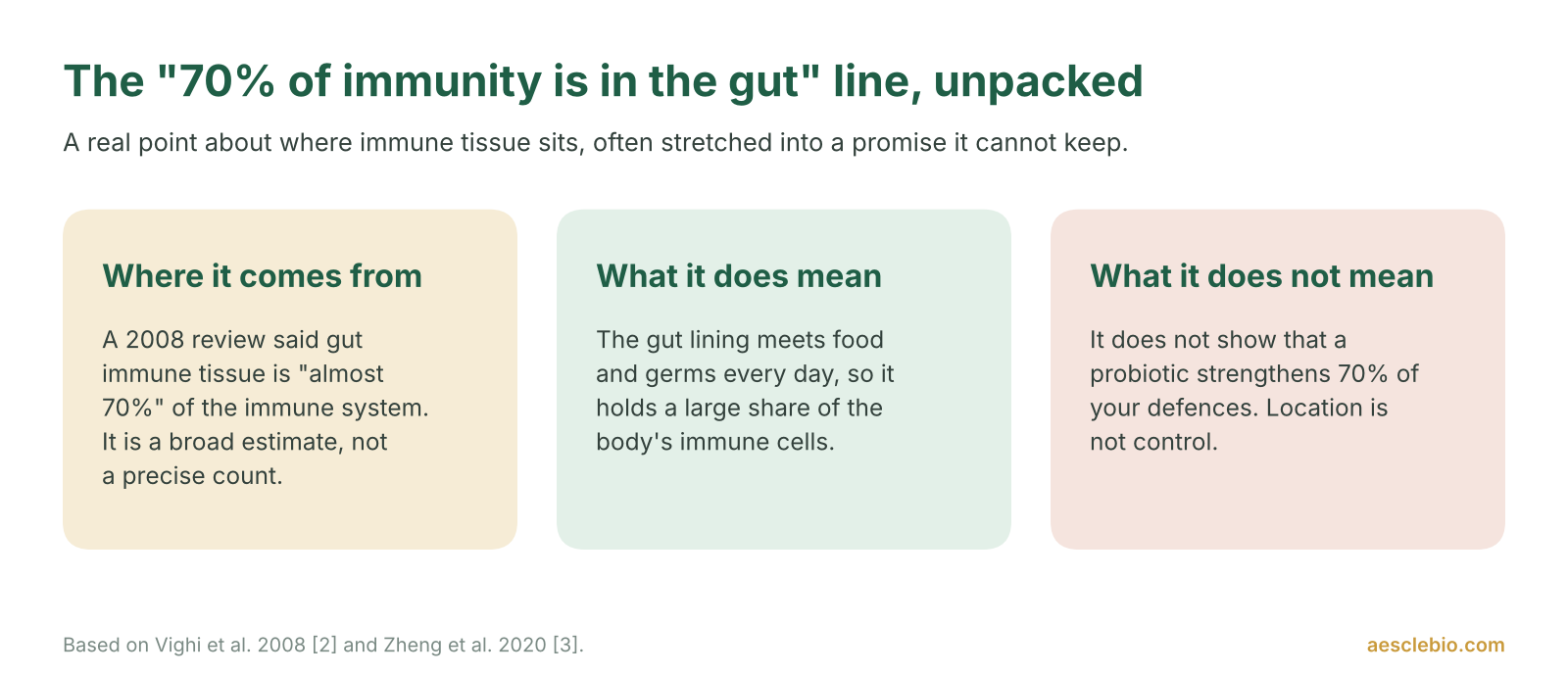
A widely cited 2008 review in the journal Clinical and Experimental Immunology states that GALT "represents almost 70% of the entire immune system" and that about 80% of the body's antibody-making plasma cells sit there [2]. This is where the popular figure usually traces back to. But the review gives it as a broad estimate, and we could not find a single study that measured exactly 70%. So it is best treated as a commonly quoted estimate: the gut holds a large share of the body's immune cells, but nobody should read "70%" as a precise count.
More importantly, the number describes location, not control. Saying most immune cells live near the gut is like saying most of a country's police stations are near its borders. It does not tell you that sending in more visitors makes the police force stronger.
How gut microbes really train the immune system
Here the science is genuinely exciting. The trillions of microbes that live in your gut, called the gut microbiota, help train the immune system from birth. A 2020 review in Cell Research describes how the microbiome plays "critical roles in the training and development" of both quick, general defences and slower, targeted ones [3].
Much of this comes from laboratory animals raised completely free of germs. In these germ-free animals, gut immune tissue develops poorly, and levels of IgA (immunoglobulin A), the main antibody that guards the gut lining, are much lower until microbes are introduced [3]. Bacteria that ferment dietary fibre make short-chain fatty acids, small compounds that help a group of calming immune cells called regulatory T cells develop in the colon [3]. These cells help the body tell the difference between real threats and harmless food or friendly bacteria.
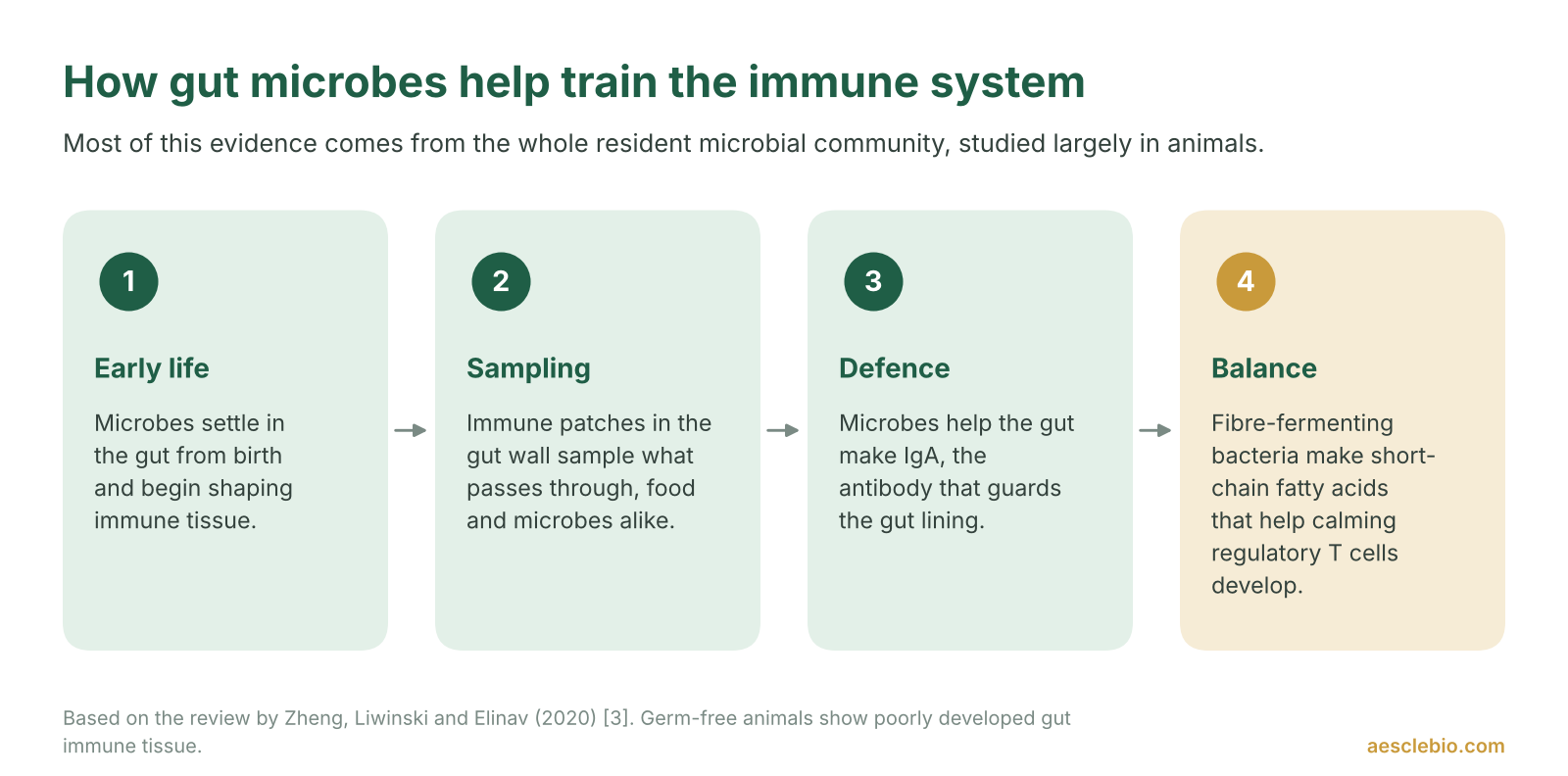
Notice what this research is about: the whole community of resident microbes, working over years, mostly studied in animals. The same review cautions that for most human conditions, a cause-and-effect link between the microbiome and immune problems "remains to be proven" [3]. A capsule of one or two strains, taken for a few weeks, is a much smaller event than a lifetime of microbial training.
Do probiotics boost immunity? What the trials show
The fair question is not "do probiotics boost immunity?" but "in trials, did a particular probiotic change something people can feel or measure?" Here is what the strongest reviews found.
Probiotics for colds and respiratory infections
The most important review is a 2022 Cochrane review. Cochrane is an independent network known for careful, cautious analyses of medical research. It pooled 23 trials with 6,950 children, adults and older people [4]. Compared with a placebo (a dummy product) or nothing, probiotics may reduce the number of people who get at least one acute upper respiratory tract infection (URTI, that is, colds and other infections of the nose and throat) by about a quarter, and may shorten an episode by about a day. The authors rated this evidence as low certainty, meaning future studies could change the picture [4]. People taking probiotics were also likely to need fewer antibiotics for these infections (moderate certainty) [4].
A 2022 review focused on adults aged 18 to 65 found a smaller effect: probiotics reduced the risk of at least one respiratory infection by about 9%, with modestly shorter and milder illnesses. Most studies had "some concerns" about quality, and no benefit was seen in physically active groups [5]. So probiotics for colds are a real research signal, but a modest one, and it comes from many different strains.
Antibiotic-associated diarrhoea
Antibiotics can upset the gut's microbes and cause diarrhoea. This is where trial evidence is firmest. In adults, a 2021 review of 42 trials with 11,305 people found that taking probiotics alongside antibiotics lowered the risk of antibiotic-associated diarrhoea by 37%, with moderate-quality evidence; trials in people at low risk showed no clear difference [6]. A Cochrane review in children found diarrhoea in 8% of those given probiotics versus 19% of those in the control groups, also rated moderate certainty [7]. Notice, though, that this is a gut effect, not proof of a stronger immune system.
Older adults
Ageing weakens both quick and targeted immune responses, which is one reason flu vaccines protect older people less well [8]. So older adults are a natural group to study. A 2017 review of 20 trials in adults, most of them older people, found that those taking probiotics or prebiotics (fibres that feed gut bacteria) made better antibody responses to the flu vaccine on some measures [8]. But a 2024 review of ways to reduce respiratory infections in care homes found that nine trials of vitamin, mineral, probiotic and herbal supplements showed no significant effect [9]. A better vaccine response in the blood is encouraging; fewer infections in real life has not been shown consistently.
| Question | What reviews found | Certainty |
|---|---|---|
| Fewer colds (all ages) | About a quarter fewer people with at least one cold-type infection [4] | Low |
| Shorter colds | About one day shorter on average [4] | Low |
| Fewer antibiotics for colds | Fewer people needed antibiotics [4] | Moderate |
| Antibiotic-associated diarrhoea | Lower risk in adults and children [6, 7] | Moderate |
| Flu vaccine response | Better antibody response on some measures, mostly in older adults [8] | Limited |
| Infections in care homes | No significant effect in trials of supplements [9] | Limited |
| Colds in babies under 2 | No significant reduction [10] | Low |
What our clinical-trial data show
Aesclebio's own analysis of 3,070 probiotic-type clinical trials registered on ClinicalTrials.gov, the public trial registry run by the US National Library of Medicine, shows how much research effort goes into this area [14]. Respiratory and immune health accounts for 276 trials, about 9% of trials started in 2021 to 2025, and is still growing at about 11% a year. By contrast, infection prevention and treatment (191 trials, covering conditions such as acute diarrhoea and other gut infections) is shrinking at about 5% a year and losing share [14]. Among the immune- and infection-related topics in the chart below, respiratory tract infections such as the common cold and flu are the most studied, with 103 trials [14].
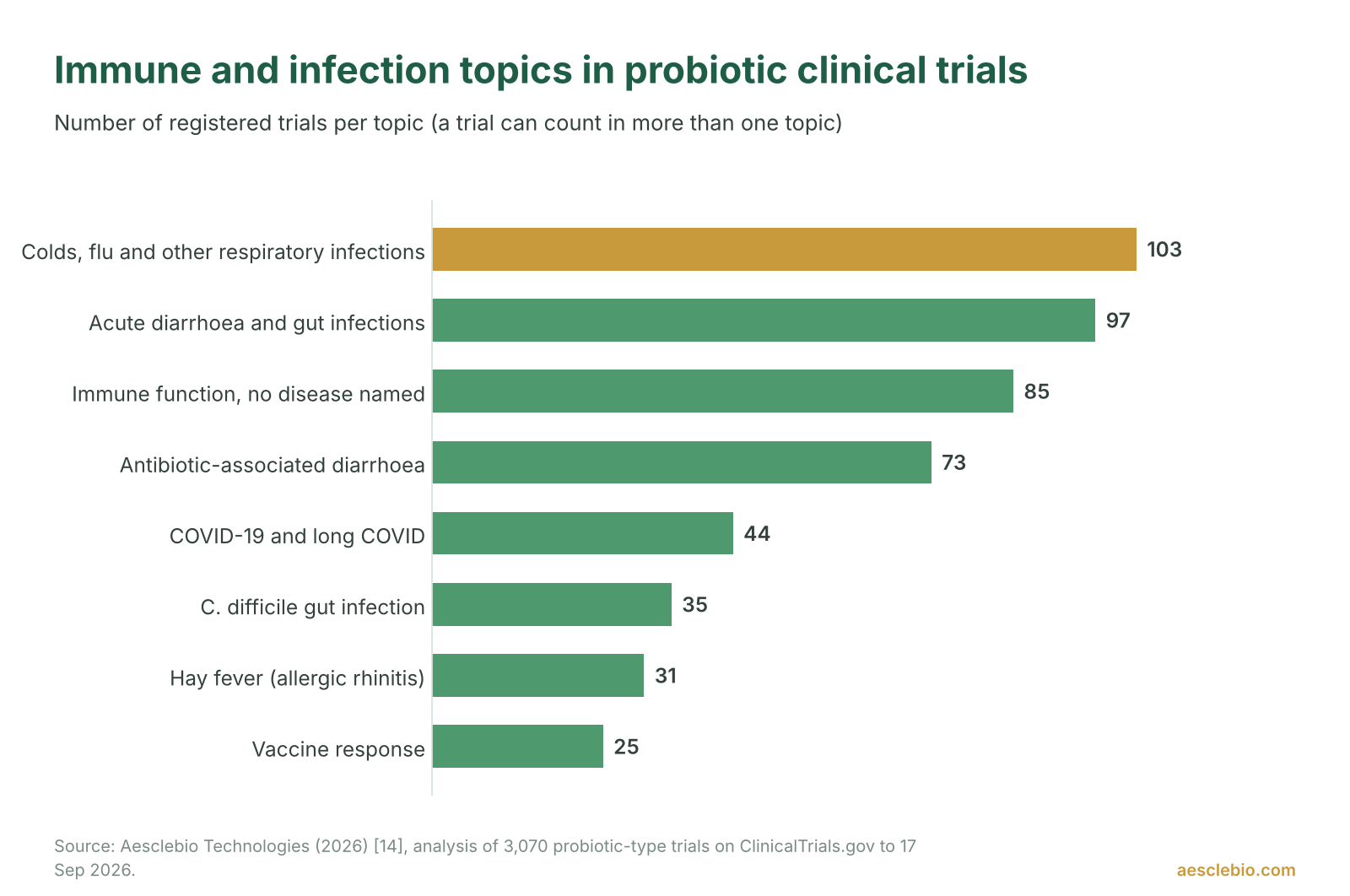
The 85 trials on "immune function and inflammation" with no disease named deserve a careful reading [14]. When a trial measures an immune marker rather than an illness, a change shows the body noticed the probiotic; it does not by itself show that people got ill less often.
Why "boosts immunity" is a claim regulators restrict
If evidence is modest and strain-specific, it makes sense that the law is strict. In the European Union, the European Commission's guidance (advisory, not law) treats even the words "contains probiotics" as a health claim, because the word "probiotic" implies a benefit [11]. Health claims need authorisation after review by the European Food Safety Authority (EFSA), which has published specific guidance on the evidence needed for claims about the immune system and defence against germs [12]. As our own review of the field notes, no probiotic health claim has been authorised in the EU to date [14].
In India, foods and supplements are regulated by the Food Safety and Standards Authority of India (FSSAI). For a probiotic sold as a food, "source of probiotics" is the only probiotic claim allowed without approval; wording such as "supports immunity" needs prior approval backed by scientific proof [13]. For businesses planning a custom formulation for immune health, or choosing probiotics for immune health ingredients, the lesson is simple: the strain's human evidence, not the label wording, is what regulators will ask for.
Immunity drops for babies and chewable immune supplements for kids
Parents often search for "infant immunity drops", "immunity drops for babies" or a "chewable immune supplement for kids". The evidence in young children is limited: a 2026 review of nine trials in babies under two found that probiotics or synbiotics (probiotics combined with fibres that feed them) did not significantly reduce colds, and concluded that routine use for this purpose is not supported, although some single strains deserve more study [10].
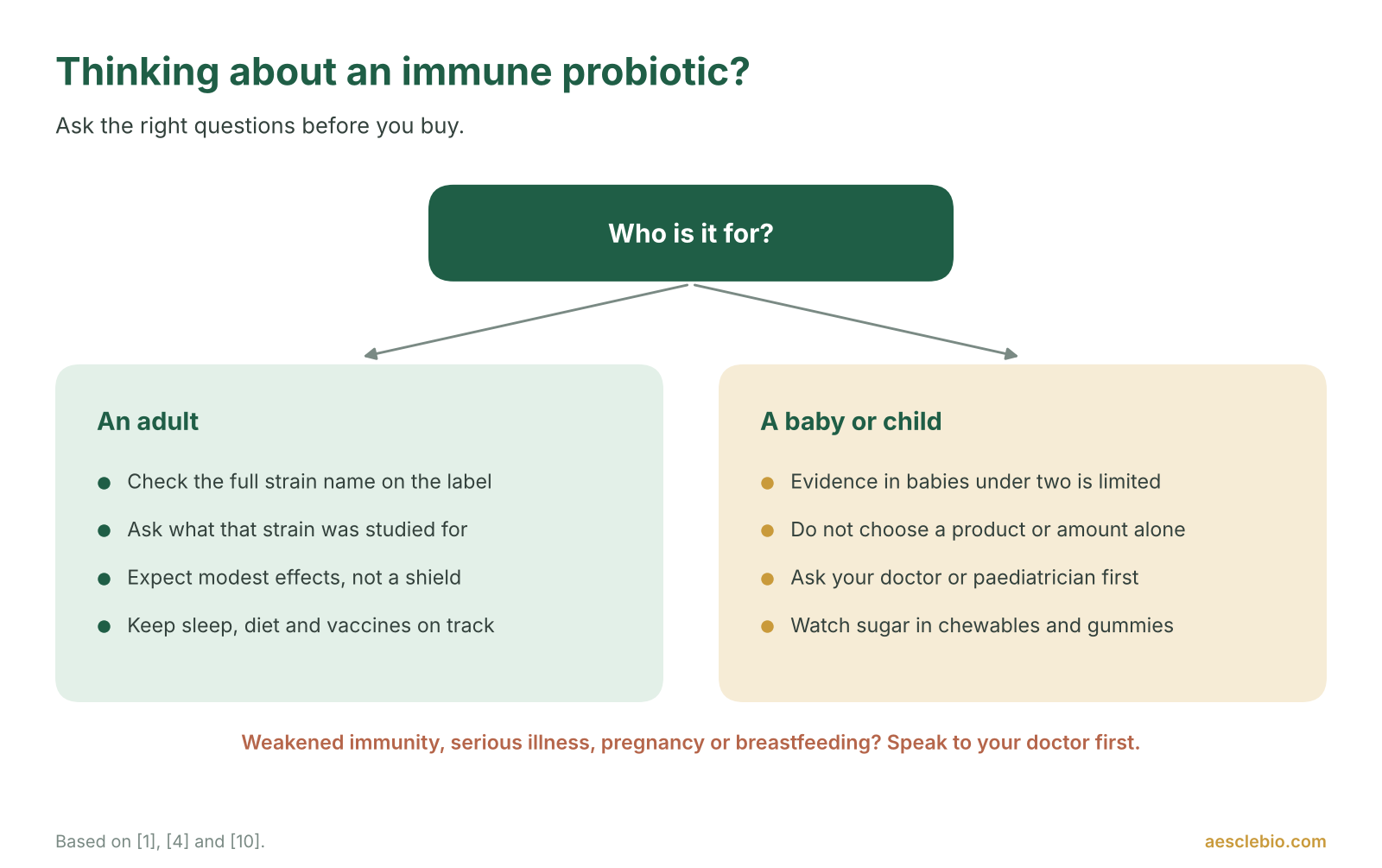
Children's needs differ with age and health. Do not choose a product or an amount for a baby or child on your own. Speak to your doctor or paediatrician first, especially for newborns, premature babies or children with a health condition.
How to read immune support probiotics labels
- Look for the full strain name: genus, species and strain code. Many effects are strain-specific, so the word "probiotic" alone tells you little [1].
- Ask what the strain was studied for. A strain tested for antibiotic-associated diarrhoea has not automatically been tested for colds.
- Treat "immune booster" wording with caution. Your immune system needs balance, not endless boosting.
- Check the live count until the end of shelf life, not only at the time of making.
- Keep the basics in place. Sleep, a fibre-rich diet, physical activity and recommended vaccines matter for healthy defences.
The bottom line
The gut is a major home of the immune system, and gut microbes genuinely help train it. But "70%" is a commonly quoted estimate about location, not a promise that probiotics strengthen most of your immunity. The best trials of immune probiotics point to modest, strain-dependent effects: possibly fewer and shorter colds, less diarrhoea during antibiotics, and some improved vaccine responses. That is worth knowing, and worth stating honestly. A probiotic with immune support evidence is a specific tool for specific situations, not a shield.
Frequently asked questions
Do probiotics boost immunity?
Not in the general sense the phrase suggests. Probiotics do not raise the whole immune system's strength. In trials, some probiotics were linked with fewer and slightly shorter colds, though the evidence is of low certainty [4], and with better antibody responses to flu vaccines in some studies [8]. Effects depend on the strain, the person and the outcome measured.
Is 70% of the immune system really in the gut?
It is a commonly quoted estimate, usually traced to a 2008 review stating that gut immune tissue makes up "almost 70%" of the immune system [2]. The gut certainly holds a large share of the body's immune cells, but we found no single study that measured exactly 70%. The figure describes where immune tissue sits, not what probiotics can do.
What is the gut immune system connection?
The gut lining holds a large network of immune tissue, and the microbes living in the gut help train it from birth. Animal studies show that without gut microbes, gut immune tissue and protective IgA antibodies develop poorly [3]. Microbes that ferment fibre also help calming immune cells develop, which helps the body avoid overreacting [3].
Do probiotics for colds work?
A 2022 Cochrane review of 23 trials found that probiotics may reduce the number of people catching at least one cold-type infection by about a quarter and may shorten episodes by about a day, but rated the evidence low certainty [4]. In working-age adults, the effect was smaller, about 9% [5]. Probiotics are not a replacement for rest, fluids or medical advice.
Which probiotics for the immune system have the best evidence?
No single answer applies, because results belong to specific strains and different trials used different ones [1, 4]. The firmest evidence for probiotics overall is for lowering antibiotic-associated diarrhoea (diarrhea) [6, 7]. For colds, evidence comes from many strains and is of low certainty [4]. Check whether the exact strain on a label was studied for the benefit you want.
What does probiotic immune support on a label mean?
It depends on the country. In the European Union even "contains probiotics" counts as a health claim needing authorisation [11], and none has been authorised for probiotics [14]. In India, "supports immunity" on a probiotic food needs prior approval from the Food Safety and Standards Authority of India [13]. Look for the strain name and the study evidence rather than the slogan.
Are infant immunity drops or kids' immune gummies worth it?
A 2026 review of nine trials in babies under two found no significant reduction in colds with probiotics or synbiotics, and did not support routine use for that purpose [10]. Evidence for children's chewable immune supplements depends on the exact ingredients. Always ask your doctor or paediatrician before giving any supplement to a baby or child.
Are immune probiotics safe for everyone?
In the trials reviewed, side effects were generally minor, such as wind or stomach discomfort [4, 7]. Rare serious infections have been reported in very ill or immune-weakened children, including those with a central venous line (a tube into a large vein) [7]. So people with a weakened immune system or serious illness, and babies born early, should only take probiotics under medical advice. The same applies during pregnancy and breastfeeding. Speak to your doctor first.
Related reading
- What Probiotics Are, and the Five Myths That Survive Every Explainer
- Your Probiotic Is a Strain, Not a Species: Reading the Code After the Name
- The Traveller's Gut (Aesclebio blog)
- Kids, Toddlers and Probiotics: Dose, Format and the Sugar Problem
- Dietary Supplement or Food Supplement? (Aesclebio blog)
References
- Hill C, Guarner F, Reid G, et al. Expert consensus document: the International Scientific Association for Probiotics and Prebiotics consensus statement on the scope and appropriate use of the term probiotic. Nature Reviews Gastroenterology & Hepatology. 2014;11:506–514. Open access. Link
- Vighi G, Marcucci F, Sensi L, et al. Allergy and the gastrointestinal system. Clinical and Experimental Immunology. 2008;153(Suppl 1):3–6. Free full text: PubMed Central PMC2515351. Link
- Zheng D, Liwinski T, Elinav E. Interaction between microbiota and immunity in health and disease. Cell Research. 2020;30(6):492–506. Free full text: PubMed Central PMC7264227. Link
- Zhao Y, Dong BR, Hao Q. Probiotics for preventing acute upper respiratory tract infections. Cochrane Database of Systematic Reviews. 2022;8(8):CD006895. Free full text: PubMed Central PMC9400717. Link
- Coleman JL, Hatch-McChesney A, Small SD, et al. Orally ingested probiotics, prebiotics, and synbiotics as countermeasures for respiratory tract infections in nonelderly adults: a systematic review and meta-analysis. Advances in Nutrition. 2022;13(6):2277–2295. Free full text: PubMed Central PMC9776651. Link
- Goodman C, Keating G, Georgousopoulou E, et al. Probiotics for the prevention of antibiotic-associated diarrhoea: a systematic review and meta-analysis. BMJ Open. 2021;11(8):e043054. Free full text: PubMed Central PMC8362734. Link
- Guo Q, Goldenberg JZ, Humphrey C, et al. Probiotics for the prevention of pediatric antibiotic-associated diarrhea. Cochrane Database of Systematic Reviews. 2019;4(4):CD004827. Free full text: PubMed Central PMC6490796. Link
- Lei WT, Shih PC, Liu SJ, et al. Effect of probiotics and prebiotics on immune response to influenza vaccination in adults: a systematic review and meta-analysis of randomized controlled trials. Nutrients. 2017;9(11):1175. Free full text: PubMed Central PMC5707647. Link
- Willcox ML, Lavu D, Yousaf U, et al. The effectiveness of interventions to reduce the transmission of acute respiratory infections in care homes: a systematic review. Journal of Public Health. 2024;46(4):551–563. Free full text: PubMed Central PMC11637680. Link
- Carnazzo SM, Sinagra E, Raimondo D, et al. Strain-specific effects of early-life probiotic supplementation on respiratory infections in infants: a systematic review and meta-analysis. Nutrients. 2026;18(13):2067. Free full text: PubMed Central PMC13363551. Link
- European Commission, Standing Committee on the Food Chain and Animal Health. Guidance on the implementation of Regulation No 1924/2006 on nutrition and health claims made on foods: conclusions of the Standing Committee. Brussels: European Commission; 14 December 2007. Link
- European Food Safety Authority (EFSA) Panel on Dietetic Products, Nutrition and Allergies. Guidance on the scientific requirements for health claims related to the immune system, the gastrointestinal tract and defence against pathogenic microorganisms. EFSA Journal. 2016. Luxembourg: Publications Office of the European Union. Open access. Link
- Aesclebio Technologies. How India Regulates Probiotic Products: a plain-language guide to the food route and the medicine route. Status as of 21 September 2026. Hyderabad: Aesclebio Technologies Pvt. Ltd.; 2026. Link
- Aesclebio Technologies. Probiotic Clinical Trials: Where the Industry Is Heading. A registry-based analysis of ClinicalTrials.gov data to 17 September 2026. Hyderabad: Aesclebio Technologies Pvt. Ltd.; 2026. Link
Disclaimer
This article is for general education only. It is not medical advice and is not intended to diagnose, treat, cure or prevent any disease. It does not promote any specific product or brand, and it makes no claims about any product.
Statements about research describe the findings of published studies. They do not mean that any particular food or supplement will have the same effect for you. Always speak to a qualified healthcare professional before changing your diet or starting a supplement, especially if you are pregnant, breastfeeding, giving products to a baby or child, or living with a health condition.
Rules on how probiotics and supplements may be described differ from country to country. Nothing in this article should be read as a health claim for any product.
All graphics are original works of Aesclebio Technologies. Figures from other studies are credited to their sources. Quotations are limited to short passages with full attribution. Any clinical-trial figures from Aesclebio's own analysis come from public registry records and do not imply that any product is effective or safe.
Prepared by the Aesclebio Research Team with the help of AI tools, under the team's direction. © 2026 Aesclebio Technologies Pvt. Ltd. All rights reserved. Short extracts may be quoted with a link to the original article.