Gut Health
Prebiotic Fibres Decoded: Inulin, FOS, GOS and HMOs
What chicory inulin, galactooligosaccharides and other prebiotics really are, which foods contain them, what the trials show, and why the right amount matters more than the biggest one.
Why so many people search for chicory inulin and GOS
Every month, thousands of people search for "chicory inulin", "galactooligosaccharides", "what is inulin powder" or "Jerusalem artichoke inulin". Most want three answers: what these fibres are, whether they work, and how to take them without feeling bloated. This article answers all three, and makes one argument along the way: a prebiotic is defined by which microbes eat it, not by how many grams of fibre it adds. That is why more is not always better.
What is a prebiotic? The 2017 expert definition
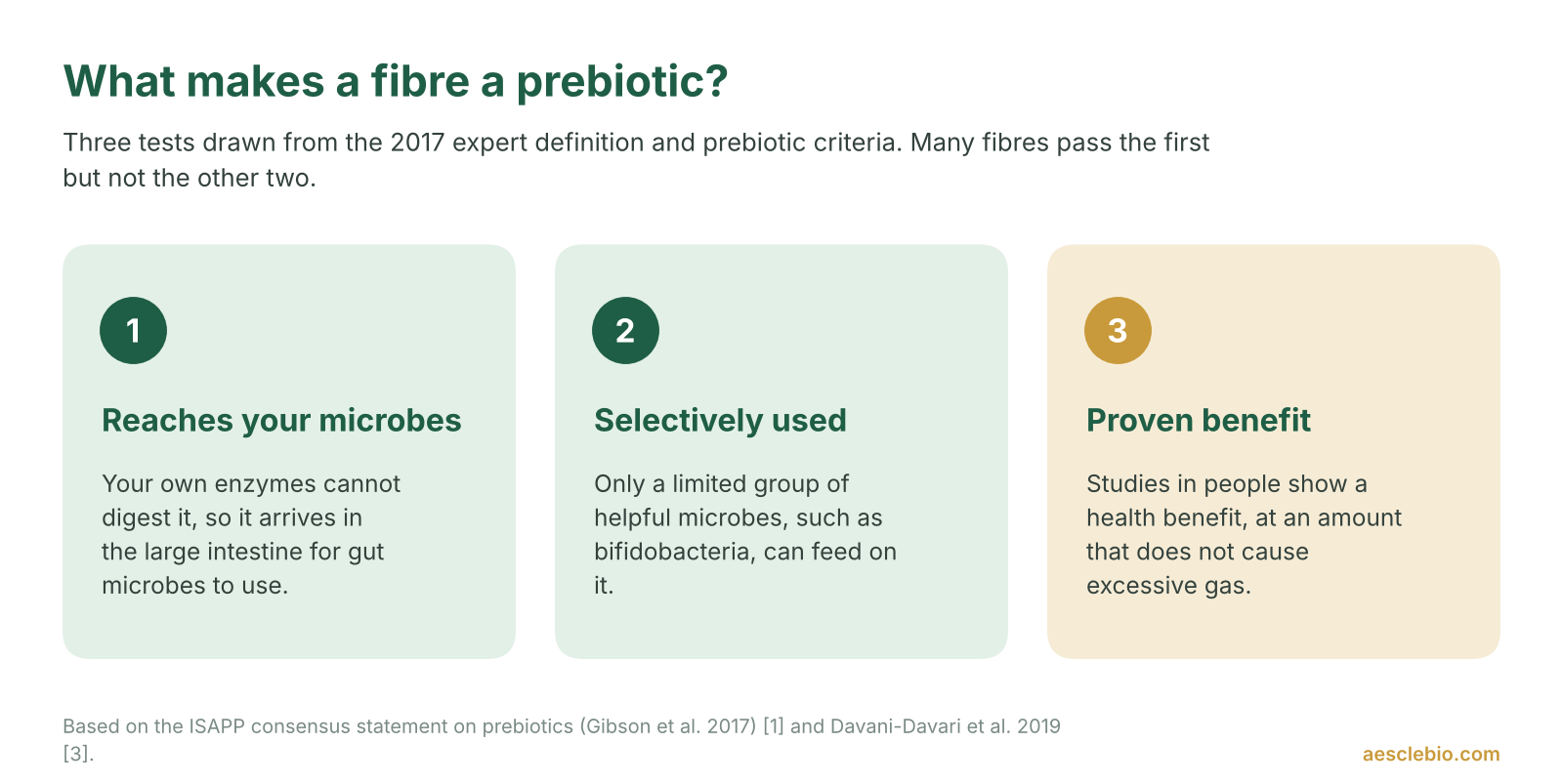
In 2017, a panel of the International Scientific Association for Probiotics and Prebiotics (ISAPP), a non-profit group of scientists, defined a prebiotic as "a substrate that is selectively utilized by host microorganisms conferring a health benefit" [1]. In plain words: food that only certain helpful microbes living in you can use, and that does you some good. A "substrate" is simply something that microbes feed on.
The key word is selectively. Most fibres feed a wide range of gut microbes. To count as a prebiotic, a substance must feed a limited group. For years that was taken to mean mainly two well-known groups of helpful bacteria, bifidobacteria and lactobacilli; the panel said the targets can now include other helpful microbes too [1]. The panel named fructans (the family that includes inulin and FOS) and galactans (the family that includes GOS) as the best-documented prebiotics in people, and called some HMOs and certain plant compounds "candidate" prebiotics [1]. Our sister article on the four "biotics" compares this definition with those for probiotics, synbiotics and postbiotics.
The main prebiotic fibres, decoded
Inulin and FOS: the fructans
What is inulin? It is a chain of fructose (fruit sugar) units that your own digestive enzymes cannot break down, so it travels to the large intestine intact [3]. Inulin chains can be up to about 60 units long. Fructo-oligosaccharides (FOS), also called oligofructose, are the same kind of chain but shorter, under 10 units [3]. Together they are called inulin-type fructans. They occur naturally in chicory root, Jerusalem artichoke, artichokes, asparagus, bananas, garlic, onions, leeks and wheat [2].
Most inulin sold as an ingredient is extracted from chicory roots, Jerusalem artichoke or agave, while FOS is often made from ordinary sugar (sucrose) using enzymes [2, 3]. Is one plant source better? Very few studies have compared them head to head. In one that compared Jerusalem artichoke inulin with chicory inulin, both raised bifidobacteria, with no clear difference between them [2].
GOS: the galactooligosaccharides
Galactooligosaccharides (GOS) are short chains of galactose, a sugar found in milk. They are made from lactose (milk sugar) using enzymes, a process that rearranges the sugar into chains your body cannot digest [3]. GOS strongly feed bifidobacteria [3]. In one carefully measured study of 18 healthy adults, GOS raised bifidobacteria in a dose-dependent way, and bifidobacteria were the only bacteria that increased consistently [5].
HMOs: the prebiotics of breast milk
Human milk oligosaccharides (HMOs) are complex sugars made only in human breast milk. Scientists have described the structures of 162 different HMOs [6]. They are the third most abundant solid part of breast milk, after lactose and fats, and infant-type bifidobacteria are especially good at using them [7]. The most abundant HMO in most mothers' milk is 2'-fucosyllactose, usually shortened to 2'-FL, which makes up about 20–40% of the HMOs in early milk [6]. Several HMOs, including 2'-FL, are now made industrially, and some are added to infant formulas [6, 7]. Infant feeding is a decision for parents and their paediatrician; this article gives no feeding or dosing advice for babies.
Emerging fibres: XOS and resistant starch
Xylooligosaccharides (XOS) are short chains made by breaking down the fibre in cereal straw and bran [8]. One recent review reports that XOS boosts bifidobacteria at lower daily amounts than FOS or GOS, often 1–2 grams for adults, with less risk of bloating at those amounts [8]. But it also notes that human studies have used very different amounts and lengths, with varied results [8]. Resistant starch, a starch that escapes digestion, has also been suggested as a prebiotic [3]. Treat both as promising rather than proven.
| Prebiotic | Natural food sources | How the ingredient is usually made | Evidence in people |
|---|---|---|---|
| Inulin (long-chain fructan) | Chicory root, Jerusalem artichoke, onions, garlic, leeks, asparagus, bananas, wheat | Extracted from chicory root, Jerusalem artichoke or agave | Strong for raising bifidobacteria; the EU food safety authority accepts 12 grams a day of chicory inulin for stool frequency, but a meta-analysis found no clear effect for long chains |
| FOS / oligofructose (short-chain fructan) | Same plants as inulin, usually in small amounts | Made from sucrose with enzymes, or by breaking down inulin | Strong for bifidobacteria; modest increase in bowel frequency |
| GOS (galactooligosaccharides) | Small amounts in milk | Made from lactose (milk sugar) with enzymes | Good for raising bifidobacteria; other benefits still being studied |
| HMOs, such as 2'-FL | Human breast milk only | Made industrially for infant formula | Candidate prebiotic; human trials mainly in infants |
| XOS, resistant starch | Cereal bran and straw (XOS); some starchy foods (resistant starch) | Broken down from plant fibre; specially processed starches | Emerging; human studies vary widely in dose and results |
Prebiotic foods: why a plate of onions is not a dose
Prebiotic fibres are found naturally in many foods, including asparagus, garlic, chicory, onions, Jerusalem artichoke, wheat, barley, rye, bananas, tomatoes, soybeans, peas, beans, and human and cow's milk [3]. FOS occurs in about 36,000 plants, yet usually in amounts too small to have a prebiotic effect, which is why manufacturers produce it on an industrial scale [3]. So what is inulin in food doing? It is part of a healthy, fibre-rich diet. But it rarely delivers the grams used in trials, and labels rarely say how much is there.
That is not a reason to skip these foods. Fibre-rich plant foods bring many other nutrients. You do not need special prebiotic recipes: a varied plate with onions, garlic, beans, whole grains and bananas already contains small amounts of several prebiotics.
The dose–tolerance trade-off
Here is the part most product pages skip. Prebiotics work by being fermented (broken down by microbes) in the large intestine, and fermentation makes gas. The ISAPP panel said a prebiotic dose should not be so high that it causes unwanted effects such as excessive gas [1].
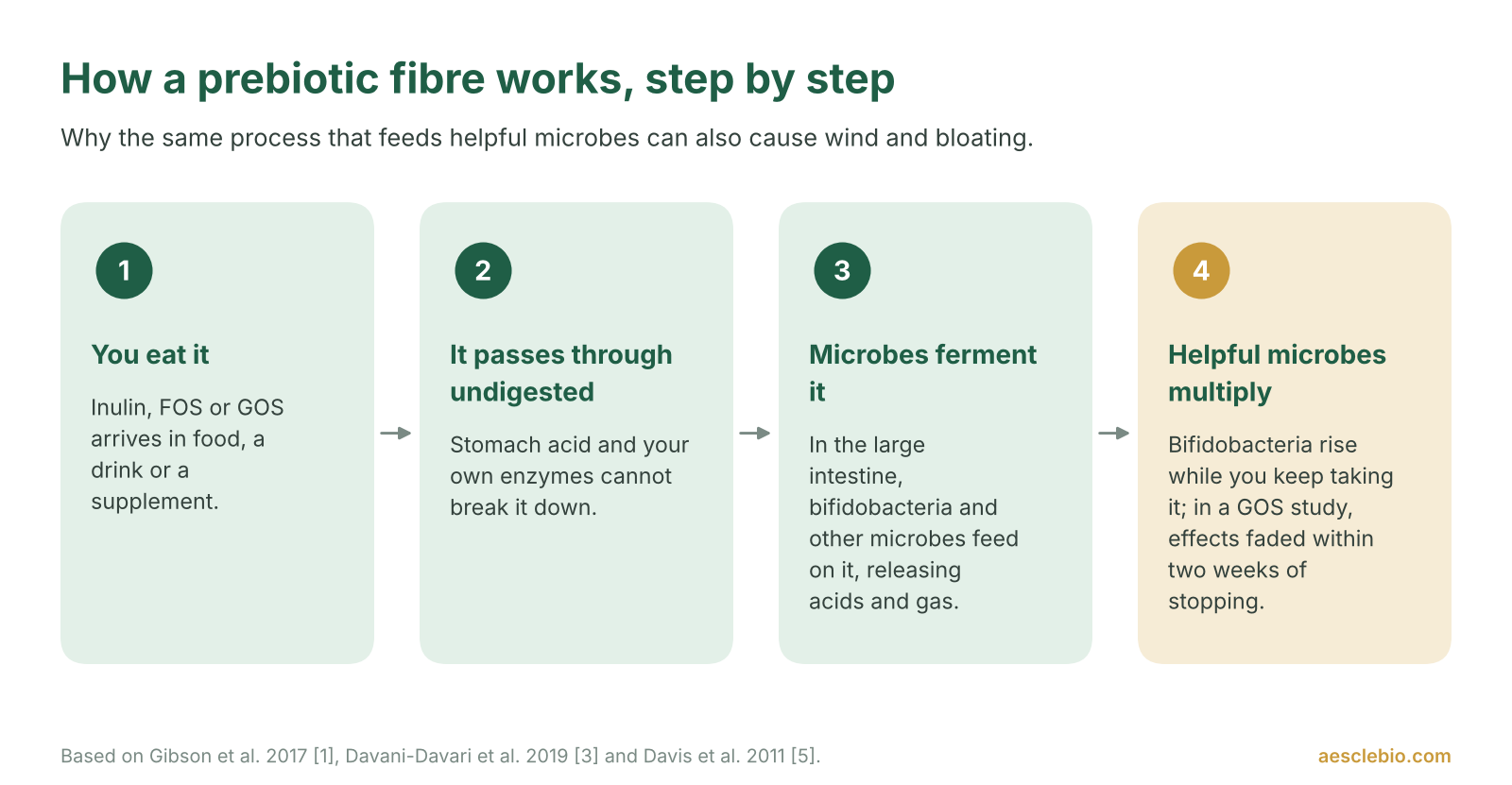
The trial data show the trade-off clearly. A systematic review of inulin-type fructans in healthy adults found that 19 of 37 studies measuring flatulence (wind) reported a significant increase, and 12 studies found more bloating, although symptoms tended to ease over time as people adapted [2]. Another review says about 2.5–10 grams a day is the amount needed for benefits, that even these amounts can cause wind, and that very large amounts (40–50 grams a day) can cause diarrhoea [3]. Shorter chains, such as FOS, are fermented faster and may cause more symptoms than long-chain inulin [3].
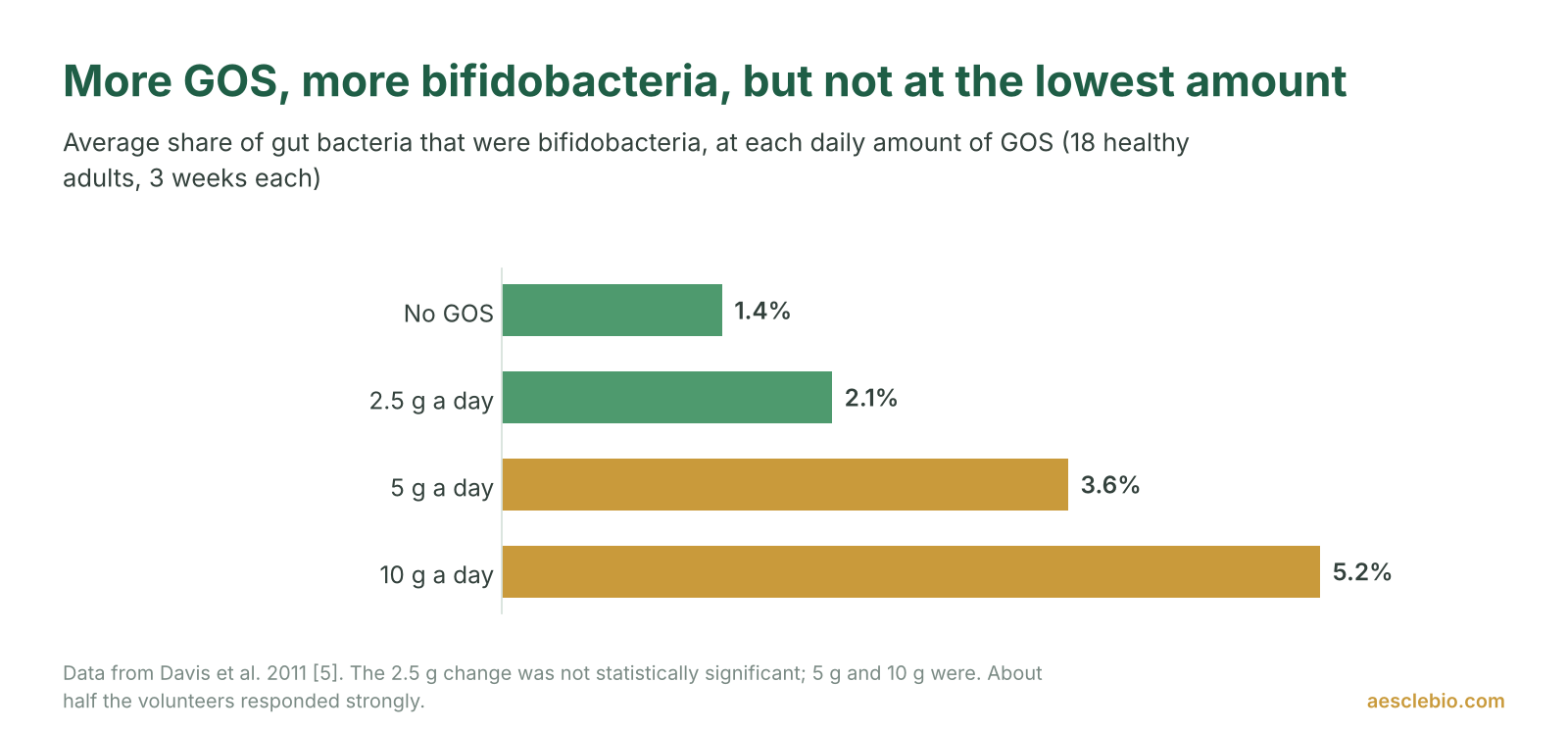
Too little may do nothing. In the GOS study, 2.5 grams a day did not change bifidobacteria, while 5 and 10 grams did, and about half the volunteers responded strongly while others barely changed [5]. The aim is the lowest amount that works for you, not the highest you can buy.
FODMAP explained: why inulin can be a problem in IBS
FODMAP stands for fermentable oligosaccharides, disaccharides, monosaccharides and polyols: short-chain carbohydrates that are poorly absorbed and easily fermented. The oligosaccharides in that list include fructans and GOS, the very same substances sold as prebiotics [9]. A low-FODMAP diet is the best-supported diet for easing symptoms of irritable bowel syndrome (IBS), a common long-term gut condition, although most of the evidence is of low quality [9]. It is done in three phases (cutting back, reintroducing foods one by one, then personalising), ideally with a trained dietitian [9]. In trials, cutting FODMAPs lowered bifidobacteria levels [9]. So people with IBS face a real tension. If you have IBS or are on a low-FODMAP diet, ask your doctor or dietitian before adding inulin powder.
Do prebiotics work? What the evidence shows
- Bifidobacteria rise. In a systematic review of trials in healthy adults, inulin-type fructans increased bifidobacteria in 33 of 35 studies, by roughly 1.8 to 3.8 times; no study found a decrease [2]. GOS showed the same pattern [5].
- Bowel movements become a little more frequent. A systematic review of 47 publications, with a meta-analysis of the placebo-controlled trials among them, found that short-chain fructans increased bowel movements by about 0.36 a day, roughly one extra every three days; long-chain fructans showed no significant effect [4]. The European Food Safety Authority (EFSA) accepted that 12 grams a day of native chicory inulin helps maintain normal bowel movements by increasing stool frequency, based on six studies with 86 people [10]. So the evidence on bowel habits is clearer for short chains than for long-chain inulin [4, 10].
- Calcium absorption: mixed. Four studies in adults found better calcium absorption after inulin-type fructans, but three found no effect, and effects on bone density and bone turnover were mixed [2]. Another review calls the calcium results conflicting [3].
- IBS: mixed. Some trials of FOS or GOS reported symptom improvements and others found none [3].
| Myth | What the evidence says |
|---|---|
| Every fibre is a prebiotic. | Only fibres used selectively by a limited group of helpful microbes, with a proven benefit, qualify [1]. |
| The more inulin, the better. | Benefits appear in a moderate range; higher amounts mostly add wind, bloating and, at very high levels, diarrhoea [2, 3]. |
| Prebiotics add new bacteria to your gut. | They feed microbes you already have. In one study, about half the volunteers barely responded, possibly because they lacked microbes able to use it [5]. |
| Prebiotics are proven to build strong bones. | Calcium absorption results are mixed, and effects on bone itself were also mixed [2, 3]. |
Prebiotics plus probiotics: synbiotics
A synbiotic is a mixture of live microbes and a substrate used by helpful microbes that, as a mixture, has shown a health benefit [11]. Nearly all synbiotics on sale or in published trials are "complementary": an established probiotic plus an established prebiotic, each working in its own way [11].
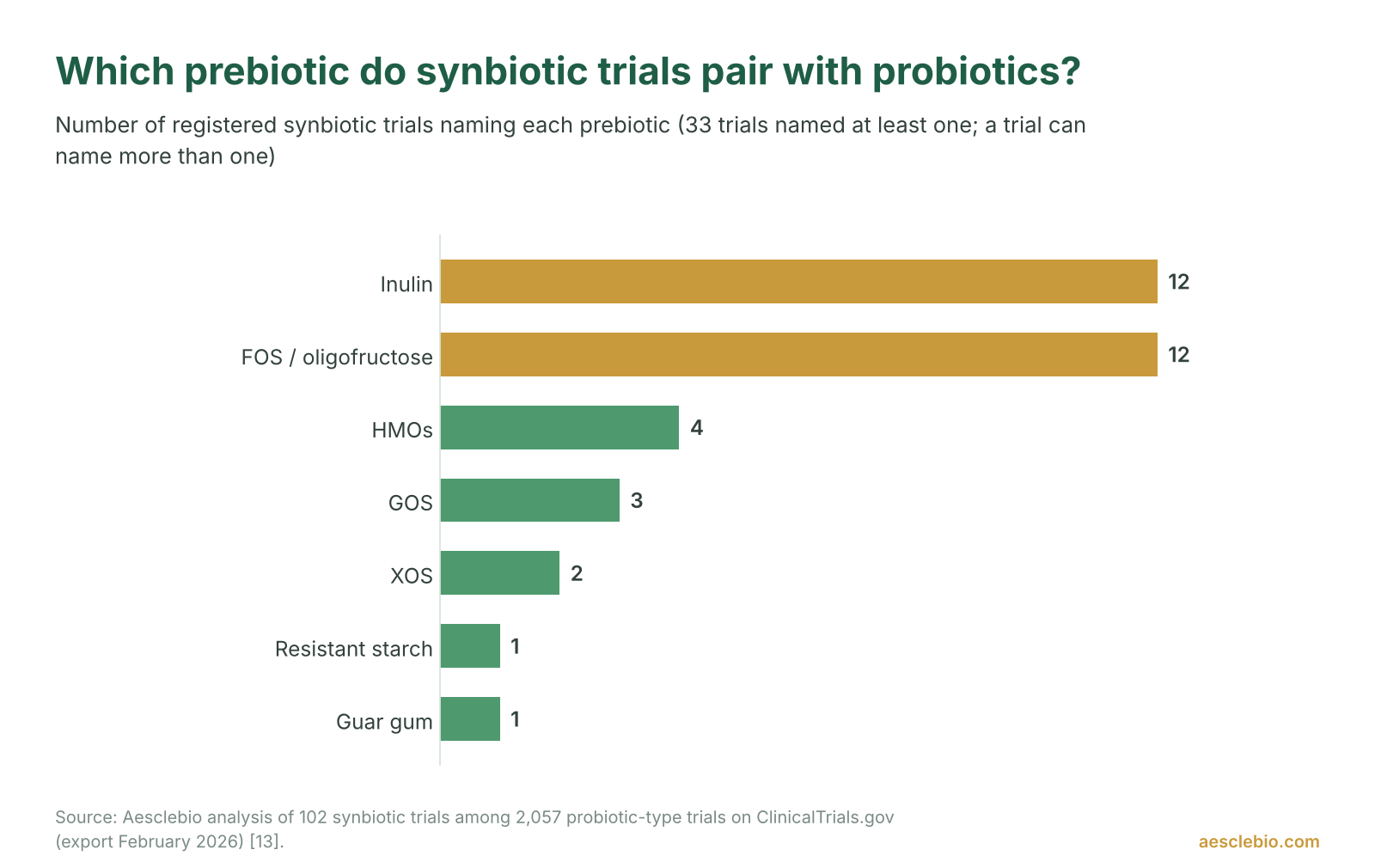
Our own research shows synbiotics are a fast-growing research area. In Aesclebio's analysis of 3,070 probiotic-type clinical trials (research studies in people) registered on ClinicalTrials.gov, the public trial registry run by the US National Library of Medicine, 294 tested synbiotics. Their registrations grew about 14% a year, and they now make up about 11% of new trials [12]. But synbiotic trials were less likely than live-probiotic trials to use the strongest design: randomised, placebo-controlled and double-blind [12]. In a separate Aesclebio analysis of ClinicalTrials.gov records, 23 of the 33 synbiotic trials that named a specific prebiotic used inulin or FOS [13].
How to use inulin powder and other prebiotic supplements
- Know which fibre you are buying. Whether the pack says chicory inulin, inulin chicory powder, FOS powder or GOS powder, check the type and the grams per serving. A label may quote the inulin content percentage of a chicory root powder; the grams of inulin in each serving tell you more. Chain length matters too [3, 4].
- Start low and build slowly. Trials found wind and bloating were common but tended to ease over time [2].
- Mix it in. Inulin powder can be stirred into drinks, yoghurt, porridge or smoothies.
- Be consistent. In the GOS study, the changes in gut bacteria faded within one to two weeks after people stopped [5]. Taking it daily matters more than the time of day.
- Read "organic" and "bulk" carefully. These words describe how the plant was farmed or how much is in the bag, not how well the fibre feeds your microbes.
- Ask first if it applies to you. If you have IBS or another gut condition, are pregnant or breastfeeding, or are buying for a child, speak to your doctor or dietitian first.
The bottom line
Inulin, FOS, GOS and HMOs are among the best-studied prebiotics, and the evidence that they feed bifidobacteria is strong [1, 2, 5]. Benefits beyond that are more modest or still being worked out. The real skill is matching the right fibre to the right amount for your gut. Start low, stay consistent, eat a fibre-rich diet, and do not mistake a bigger scoop for a better result.
Frequently asked questions
What is inulin powder, and what is it used for?
Inulin powder is a soluble fibre, usually extracted from chicory root, Jerusalem artichoke or agave [2]. It is usually stirred into drinks or foods. Inulin powder uses include adding fibre to the diet and feeding bifidobacteria, which inulin-type fibres raised in 33 of 35 trials in healthy adults [2]. Food makers also use it to give foods a creamy texture in place of some fat [2].
What is chicory root inulin, and how is agave inulin vs chicory inulin different?
Chicory root inulin is extracted from the roots of the chicory plant, a major commercial source [2]. The European Food Safety Authority (EFSA) has accepted that 12 grams a day of native chicory inulin helps maintain normal bowel movements [10]. Agave inulin comes from the agave plant. Direct comparisons between plant sources are rare, so there is no strong evidence that one is better [2].
What is Jerusalem artichoke inulin?
It is inulin extracted from the tubers of the Jerusalem artichoke, a knobbly root vegetable that is one of the commercial sources of inulin [2]. In a study comparing Jerusalem artichoke inulin with chicory inulin, both raised bifidobacteria, with no statistically significant difference between them [2].
What are galactooligosaccharides (GOS), and which foods contain them?
Galactooligosaccharides are short chains of galactose made from lactose (milk sugar) with enzymes [3]. Milk contains only small amounts of prebiotics, so GOS in supplements and fortified foods is manufactured [3]. In a study of healthy adults, GOS raised bifidobacteria at 5 and 10 grams a day, but not at 2.5 grams [5].
What is FOS powder?
FOS (fructo-oligosaccharides, also called oligofructose) are short fructan chains of fewer than 10 sugar units [3]. They are made from sucrose with enzymes or by breaking down inulin [2, 3]. Short-chain fructans increased bowel movement frequency in a meta-analysis, but they also tend to be fermented faster, which can mean more wind [3, 4].
What is xylooligosaccharide (XOS)?
Xylooligosaccharide is a short-chain fibre made by breaking down the fibre (xylan) in cereal bran and straw [8]. One recent review reports that it can raise bifidobacteria at lower amounts than FOS or GOS, and may cause less bloating at those amounts. Human studies so far have used very different amounts and lengths, with varied results, so XOS is best seen as an emerging prebiotic [8].
What is 2'-FL HMO?
2'-FL (2'-fucosyllactose) is the most abundant human milk oligosaccharide in most mothers' milk [6]. It makes up about 20–40% of the HMOs in early breast milk, and levels change as breastfeeding goes on [6]. It is now made industrially and added to some infant formulas [6, 7]. Questions about infant feeding or formula should go to a paediatrician.
How do you take inulin powder?
Start with a small amount stirred into a drink, yoghurt or porridge, and increase slowly over days or weeks. In trials, wind and bloating were common but tended to ease as people adapted [2]. If you have IBS, are pregnant or breastfeeding, or are thinking of giving it to a child, speak to your doctor first.
When should you take a prebiotic?
Daily consistency matters more than the time of day. In a GOS study, the shifts in gut bacteria faded within one to two weeks after people stopped taking it [5]. Many people find a prebiotic fiber supplement easiest to remember when they take it with a meal.
Related reading
- Prebiotics, Probiotics, Postbiotics, Synbiotics: A Field Guide Beyond the Buzzwords
- Microbiome vs Microbiota: The Words Everyone Uses and Almost Nobody Defines
- Probiotic Foods vs Probiotic Supplements: Why a Probiotic Foods List Is Not a Dose
- What Probiotics Are, and the Five Myths That Survive Every Explainer
References
- Gibson GR, Hutkins R, Sanders ME, et al. Expert consensus document: the International Scientific Association for Probiotics and Prebiotics (ISAPP) consensus statement on the definition and scope of prebiotics. Nature Reviews Gastroenterology & Hepatology. 2017;14(8):491–502. Open access. Link
- Hughes RL, Alvarado DA, Swanson KS, Holscher HD. The prebiotic potential of inulin-type fructans: a systematic review. Advances in Nutrition. 2022;13(2):492–529. Free full text: PubMed Central PMC8970830. Link
- Davani-Davari D, Negahdaripour M, Karimzadeh I, et al. Prebiotics: definition, types, sources, mechanisms, and clinical applications. Foods. 2019;8(3):92. Free full text: PubMed Central PMC6463098. Link
- de Vries J, Le Bourgot C, Calame W, Respondek F. Effects of β-fructans fiber on bowel function: a systematic review and meta-analysis. Nutrients. 2019;11(1):91. Free full text: PubMed Central PMC6356805. Link
- Davis LMG, Martínez I, Walter J, et al. Barcoded pyrosequencing reveals that consumption of galactooligosaccharides results in a highly specific bifidogenic response in humans. PLoS One. 2011;6(9):e25200. Free full text: PubMed Central PMC3180383. Link
- Thum C, Wall CR, Weiss GA, et al. Changes in HMO concentrations throughout lactation: influencing factors, health effects and opportunities. Nutrients. 2021;13(7):2272. Free full text: PubMed Central PMC8308359. Link
- Sakanaka M, Gotoh A, Yoshida K, et al. Varied pathways of infant gut-associated Bifidobacterium to assimilate human milk oligosaccharides: prevalence of the gene set and its correlation with bifidobacteria-rich microbiota formation. Nutrients. 2020;12(1):71. Free full text: PubMed Central PMC7019425. Link
- Kostanova A, Shamsiyeva Y, Yermukhanov A, Kiribayeva A. Cereal biomass-derived xylo- and malto-oligosaccharides as next-generation prebiotics: a comprehensive review of sustainable production and translational benefits for human and animal gut microbiota. Frontiers in Microbiology. 2026;17:1803157. Free full text: PubMed Central PMC13046717. Link
- Bertin L, Zanconato M, Crepaldi M, et al. The role of the FODMAP diet in IBS. Nutrients. 2024;16(3):370. Free full text: PubMed Central PMC10857121. Link
- EFSA Panel on Dietetic Products, Nutrition and Allergies (NDA). Scientific Opinion on the substantiation of a health claim related to "native chicory inulin" and maintenance of normal defecation by increasing stool frequency pursuant to Article 13.5 of Regulation (EC) No 1924/2006. EFSA Journal. 2015;13(1):3951. Open access. Link
- Swanson KS, Gibson GR, Hutkins R, et al. The International Scientific Association for Probiotics and Prebiotics (ISAPP) consensus statement on the definition and scope of synbiotics. Nature Reviews Gastroenterology & Hepatology. 2020;17(11):687–701. Free full text: PubMed Central PMC7581511. Link
- Aesclebio Technologies. Probiotic Clinical Trials: Where the Industry Is Heading. A registry-based analysis of ClinicalTrials.gov data to 17 September 2026. Hyderabad: Aesclebio Technologies Pvt. Ltd.; 2026. Link
- Aesclebio Technologies. Enriched analysis of 2,057 probiotic-type interventional trials registered on ClinicalTrials.gov (data export February 2026). Hyderabad: Aesclebio Technologies Pvt. Ltd.; 2026. Link
Disclaimer
This article is for general education only. It is not medical advice and is not intended to diagnose, treat, cure or prevent any disease. It does not promote any specific product or brand, and it makes no claims about any product.
Statements about research describe the findings of published studies. They do not mean that any particular food or supplement will have the same effect for you. Always speak to a qualified healthcare professional before changing your diet or starting a supplement, especially if you are pregnant, breastfeeding, giving products to a baby or child, or living with a health condition.
Rules on how probiotics and supplements may be described differ from country to country. Nothing in this article should be read as a health claim for any product.
All graphics are original works of Aesclebio Technologies. Figures from other studies are credited to their sources. Quotations are limited to short passages with full attribution. Any clinical-trial figures from Aesclebio's own analysis come from public registry records and do not imply that any product is effective or safe.
Prepared by the Aesclebio Research Team with the help of AI tools, under the team's direction. © 2026 Aesclebio Technologies Pvt. Ltd. All rights reserved. Short extracts may be quoted with a link to the original article.