
Knowledge Series · Probiotic Science · Strain by Strain
Lactobacillus rhamnosus GG in Oil Drops
The world’s best-documented probiotic strain: what the science shows, what it doesn’t, and why “which GG?” is the smartest question to ask
In 1983, Sherwood Gorbach and Barry Goldin at Tufts University set out to find the ideal probiotic. It had to survive stomach acid and bile, stick to the gut lining and be safe. From a healthy human gut they isolated a strain that ticked every box and named it with their initials: GG.
Four decades later, Lacticaseibacillus rhamnosus GG (deposited as ATCC 53103) is arguably the most-studied probiotic strain in the world. It is sold worldwide in foods, capsules, sachets and, increasingly, oil drops.
This article looks at what that science actually says, where its limits are, and how to judge a GG product critically.
1. What makes GG different from other L. rhamnosus?
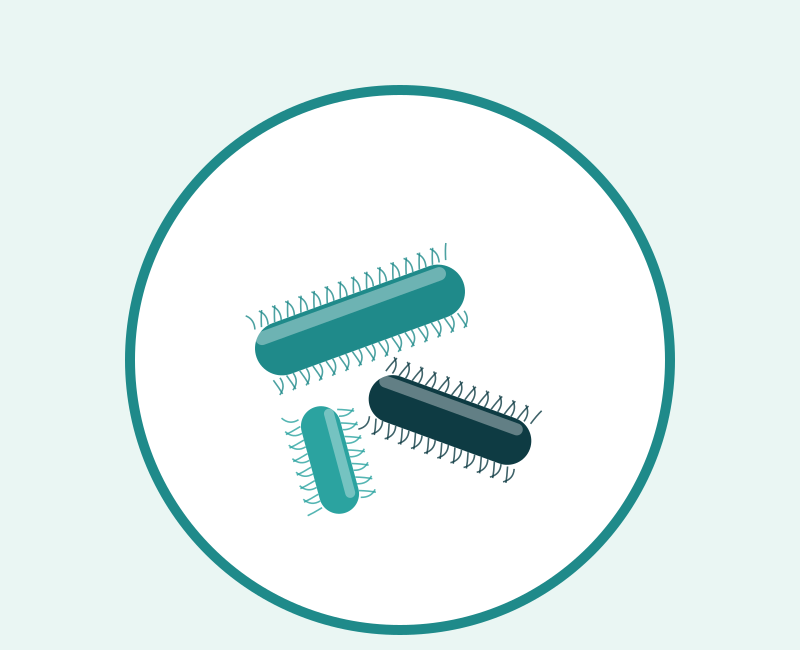
L. rhamnosus is a Gram-positive, non-spore-forming, non-motile rod (about 0.75 × 1.5–6 µm). It is catalase-negative, facultatively heterofermentative and produces only L(+)-lactic acid. Until 1989 it was classed as a subspecies of L. casei; in 2020 it moved to the new genus Lacticaseibacillus (Zheng et al., 2020).
GG's signature is its pili, hair-like surface structures encoded by the spaCBA gene cluster. Whole-genome sequencing in 2009 revealed that these pili carry a protein that binds human intestinal mucus (Kankainen et al., 2009). They help explain why GG adheres so well to the gut lining, and why it can persist there longer than many other lactobacilli.
- Acid tolerance: 80–89% survival after 1 h at pH 3.5 with pepsin (in vitro)
- Bile tolerance: 80–89% survival in 0.3% bile salts (in vitro)
- Adhesion: binds the human intestinal cell lines Caco-2 and HT-29
- Safety markers: no acquired antibiotic resistance on the EFSA panel; no histamine or tyramine genes
2. How strong is the evidence?
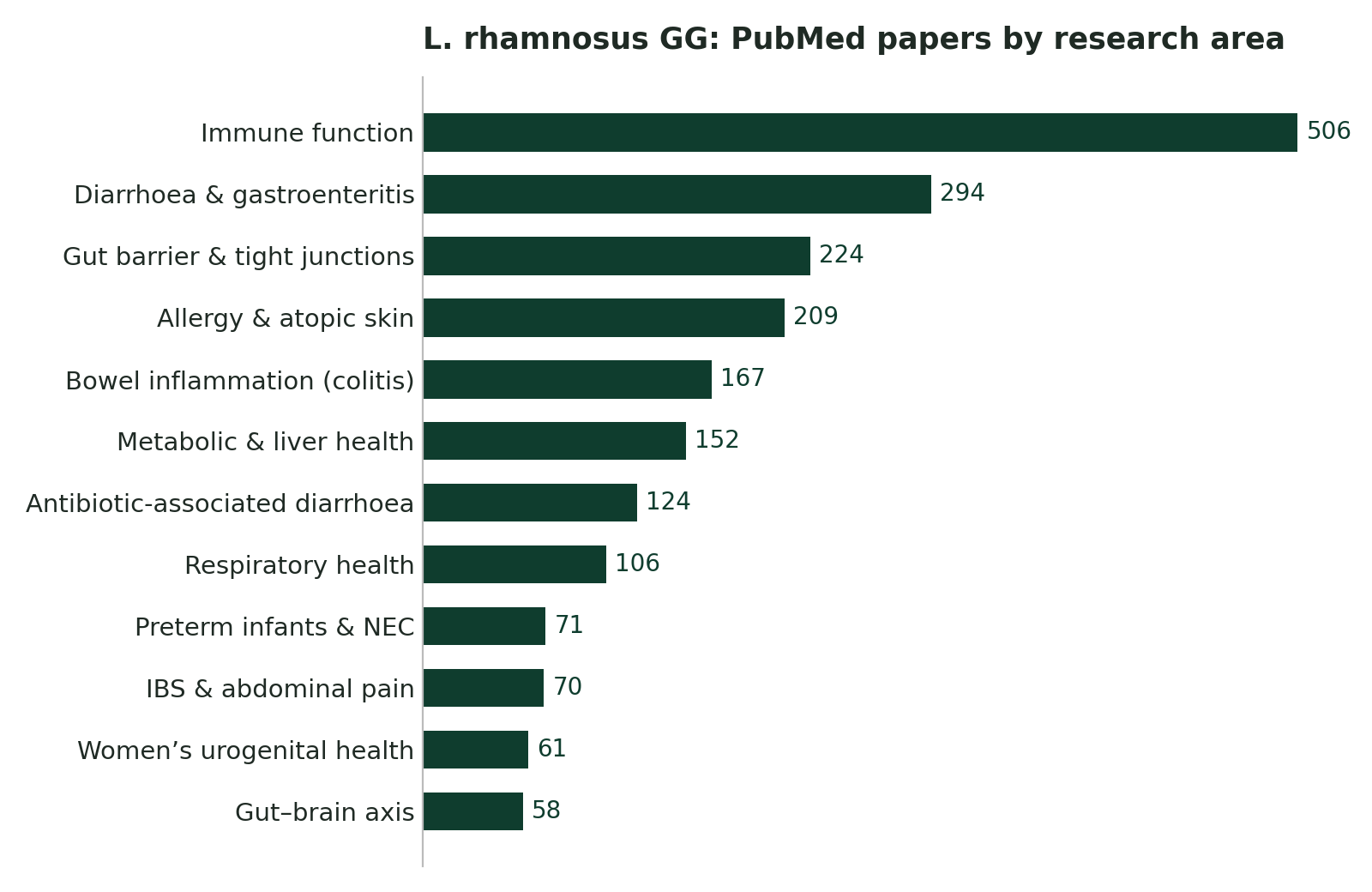
Searching PubMed for GG ("rhamnosus GG", "Lactobacillus GG", ATCC 53103, or LGG with probiotic terms) on 18 September 2026 returns:
| Measure | Count | What it tells you |
|---|---|---|
| All publications | 2,404 | Unusually deep for a single strain |
| Clinical-trial reports | 320 | Extensive human intervention data |
| Randomised controlled trials | 292 | The strongest type of single study |
| Systematic reviews & meta-analyses | 77 | Evidence repeatedly pooled and re-tested |
| Papers since 2021 | 946 | Research is still active |
This is the key difference from most probiotics: GG's evidence belongs to the strain itself, not borrowed from its species. The largest research areas are immune function, gastroenteritis, the gut barrier, allergy and atopic skin, and bowel inflammation.
3. What do the landmark human studies show?
A selection of well-known human studies:
| Study | Who | Daily GG dose | What was found |
|---|---|---|---|
| Basu 2009, J Clin Gastroenterol | 559 hospitalised Indian children with acute watery diarrhoea | 10¹⁰ or 10¹² CFU twice daily | Hospital stay 6.2 vs 9.75 days; the two doses worked equally |
| Aggarwal 2014, Indian J Med Res | 200 Indian children with acute diarrhoea | 10⁹ CFU for 5 days | Diarrhoea ended at 60 h vs 78 h |
| Szajewska 2015, meta-analysis | 12 RCTs, 1,499 people on antibiotics | 4×10⁸ – 1.2×10¹¹ CFU | Antibiotic-associated diarrhoea 12.3% vs 22.4%; clearest in children |
| Hojsak 2010, Clin Nutr | 281 children in day care | 10⁹ CFU for 3 months | Fewer upper respiratory infections (RR 0.66) |
| Kalliomäki 2001, Lancet | 159 at-risk mother–infant pairs | 10¹⁰ CFU, perinatal | Atopic eczema at age 2: 23% vs 46% |
| Tapiovaara 2016, pooled safety | 1,909 healthy children & adults, 6 trials | various | No adverse events attributable to GG |
In 2023 the ESPGHAN Special Interest Group on Gut Microbiota recommended GG (alongside S. boulardii) for preventing antibiotic-associated diarrhoea in children, and listed it among strains that may be considered for acute gastroenteritis.
Notice two things. First, these are mostly disease settings, which is why their results cannot be printed as claims on a health-supplement label. Second, the doses were mostly 1–10 billion CFU a day or more.
4. Is every “GG” the same GG?
This is the sharpest question a clinician or buyer can ask. Bacteria are living organisms, and repeated industrial culturing can in principle cause genetic drift. In 2013, Sybesma and colleagues reported GG-like isolates from commercial products that had lost the spaCBA pili genes, the very feature that makes GG special. In contrast, a 2020 study of one industrial GG process found the genome, including the pili genes, 100% unchanged across 31 samples from seven batches (Stage et al., 2020).
GG is now supplied by more than one culture producer. The original commercial lineage is marketed under the trademark LGG® (Chr. Hansen, now Novonesis). Other producers supply "L. rhamnosus GG" and typically support it by comparing their genome with the public GG reference genomes (NCBI NC_013198.1 and NC_017482.1).
5. Why deliver GG in oil drops, and what dose makes sense?
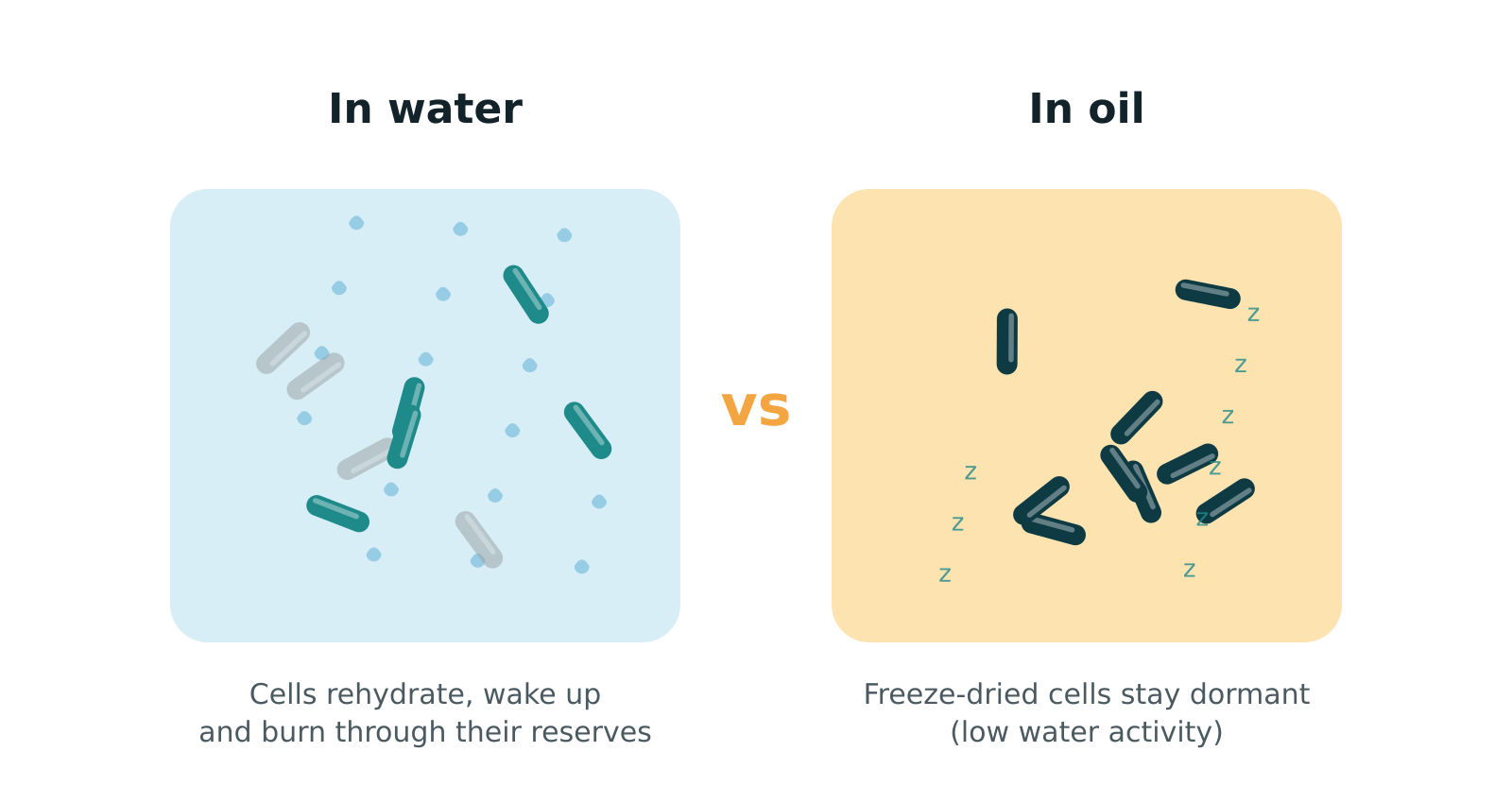
Freeze-dried GG survives best when kept dry. Suspending it in sunflower oil and/or MCT oil keeps the cells dormant, gives a taste-neutral format for older children and adults who dislike capsules, and allows easy dosing on a spoon or in room-temperature food. Shake before use, never add to hot food, and respect the storage temperature and in-use period.
FSSAI requires at least 10⁸ CFU (100 million) per daily serving, counted at the end of shelf life. GG oil drops sold in India today range from that floor up to around 1 billion CFU per serving. Because most GG trials used 10⁹–10¹⁰ CFU a day, a product closer to the studied dose range will be easier to defend in front of a specialist. As the Basu trial showed, though, beyond a point more is not better.
6. Any safety questions to be aware of?
Vancomycin: GG shows high vancomycin MICs. This is an intrinsic, species-wide property of L. rhamnosus arising from cell-wall chemistry, not transferable van genes like those in enterococci. EFSA does not require vancomycin testing for this species.
Infection risk: rare cases of Lactobacillus bacteraemia, including GG, have been reported in critically ill, immunocompromised or central-line-dependent patients. Such patients should use probiotics only under specialist supervision.
Antibiotics: GG is susceptible to common antibiotics such as ampicillin and erythromycin, so it is commonly taken a couple of hours apart from the antibiotic dose.
7. What can a GG supplement legally say in India?
Under FSSAI's nutraceutical framework, probiotic health supplements are for people above 2 years; ages 2–5 only on the advice of a doctor, dietitian or nutritionist. Labels must show genus, species and strain, CFU at end of shelf life, "HEALTH SUPPLEMENT" and "NOT FOR MEDICINAL USE".
Factual and "Source of probiotic" (≥ 10⁸ CFU/day) statements are allowed. Function claims such as "helps maintain a healthy balance of gut flora" need human evidence at the strain and dose sold. Claims to treat or prevent diarrhoea, antibiotic-associated diarrhoea, IBS, eczema or infections are disease claims: they turn the product into a drug under the Drugs and Cosmetics Act (s.3(b)) and breach FSSAI's Advertising & Claims Regulations (Reg. 10). "Recommended by doctors" is also prohibited (Reg. 10(2)). The trademark "LGG®" should not be used for GG supplied by other producers.
Seven questions to ask about any GG product
| # | Check | Ask |
|---|---|---|
| 1 | Strain identity | Does the label say "L. rhamnosus GG" and name the culture producer? |
| 2 | Genome | Is there genome data versus ATCC 53103, including the pili genes? |
| 3 | Dose | How many CFU per day at end of shelf life, and how does that compare with the studies? |
| 4 | Evidence match | Is the study you are citing relevant to this population and purpose? |
| 5 | Safety | Is there an antibiogram showing no acquired resistance? |
| 6 | Stability | Is there real-time data at Indian storage temperatures? |
| 7 | Claims | Does the label avoid disease claims, endorsements and the LGG® trademark? |
Myth vs fact
| Myth | Fact |
|---|---|
| All GG products are identical. | Genome drift is possible; ask for genome and pili data. |
| GG's clinical results apply at any dose. | Most trials used 10⁹–10¹⁰ CFU/day. |
| Vancomycin resistance in GG is dangerous. | It is intrinsic to the species and not transferable. |
| Oil makes GG survive the stomach. | Oil protects shelf life; acid and bile tolerance is the strain's own. |
| A supplement can say it prevents diarrhoea if studies show it. | In India that is a disease claim, allowed only for drugs. |
Frequently asked questions
Q. What does "GG" stand for?
The initials of its discoverers, Sherwood Gorbach and Barry Goldin, who isolated it in 1983.
Q. Is LGG the same as L. rhamnosus GG?
LGG® is a trademark for the original commercial lineage of the GG strain. Other producers supply GG under the name "L. rhamnosus GG".
Q. Why is it now called Lacticaseibacillus?
The Lactobacillus genus was split into 25 genera in 2020. The strain itself is unchanged.
Q. Can GG drops be given to toddlers?
In India, health supplements are for over-2s; for ages 2–5 only on the advice of a doctor, dietitian or nutritionist.
Q. How long should GG be taken?
Studies range from 5 days (acute settings) to months (daily-life settings). Follow the label and professional advice.
Q. Do I need to refrigerate GG oil drops?
Follow the label. Many oil drops are designed for storage at or below 25 °C, with a limited in-use period after opening.
Q. Is GG vegetarian and dairy-free?
The strain can be produced on non-dairy media, but check the specific product's documentation.
References
- IFF / DuPont Danisco. Lactobacillus rhamnosus GG – Technical Memorandum TM 73-1 US 6.19.
- Kankainen M, et al. Comparative genomic analysis of Lactobacillus rhamnosus GG reveals pili containing a human-mucus binding protein. PNAS. 2009;106:17193-8.
- Zheng J, et al. A taxonomic note on the genus Lactobacillus. Int J Syst Evol Microbiol. 2020;70:2782-858.
- Basu S, et al. Efficacy of high-dose L. rhamnosus GG in controlling acute watery diarrhea in Indian children. J Clin Gastroenterol. 2009;43:208-13.
- Aggarwal S, et al. Lactobacillus GG for treatment of acute childhood diarrhoea: an open-labelled RCT. Indian J Med Res. 2014;139:379-85.
- Szajewska H, Kołodziej M. Systematic review with meta-analysis: L. rhamnosus GG in the prevention of antibiotic-associated diarrhoea. Aliment Pharmacol Ther. 2015;42:1149-57.
- Hojsak I, et al. Lactobacillus GG in the prevention of GI and respiratory tract infections in children who attend day care centers. Clin Nutr. 2010;29:312-6.
- Kalliomäki M, et al. Probiotics in primary prevention of atopic disease: a randomised placebo-controlled trial. Lancet. 2001;357:1076-9.
- Tapiovaara L, et al. Absence of adverse events in healthy individuals using probiotics: analysis of six randomised studies. Benef Microbes. 2016;7:161-9.
- Sybesma W, et al. Genome instability in Lactobacillus rhamnosus GG. Appl Environ Microbiol. 2013;79:2233-9.
- Stage M, et al. Lactobacillus rhamnosus GG genomic and phenotypic stability in an industrial production process. Appl Environ Microbiol. 2020;86:e02780-19.
- Szajewska H, et al. Probiotics for the management of pediatric gastrointestinal disorders: ESPGHAN position paper. J Pediatr Gastroenterol Nutr. 2023;76:232-47.
- FSSAI. FSS (Health Supplements, Nutraceuticals, FSDU, FSMP and Prebiotic and Probiotic Food) Regulations, 2022, and Directions; FSS (Advertising and Claims) Regulations, 2018.
- PubMed (NCBI) searches run 18 September 2026 (see article for terms).
Important information
This article is educational and intended for healthcare professionals and the nutraceutical trade. It does not promote any product and is not medical advice. Research findings described apply to the strains and doses studied. Probiotic health supplements are not intended to diagnose, treat, cure or prevent any disease. LGG® is a registered trademark of its owner. Illustrations are original artwork.