Presentation · India · Probiotic Regulation
How India Regulates Probiotic Products: A Plain-Language Guide
The food route and the medicine route for probiotics in India, explained step by step: licences, approvals, testing, labels, claims, imports, exports, recent changes and enforcement.
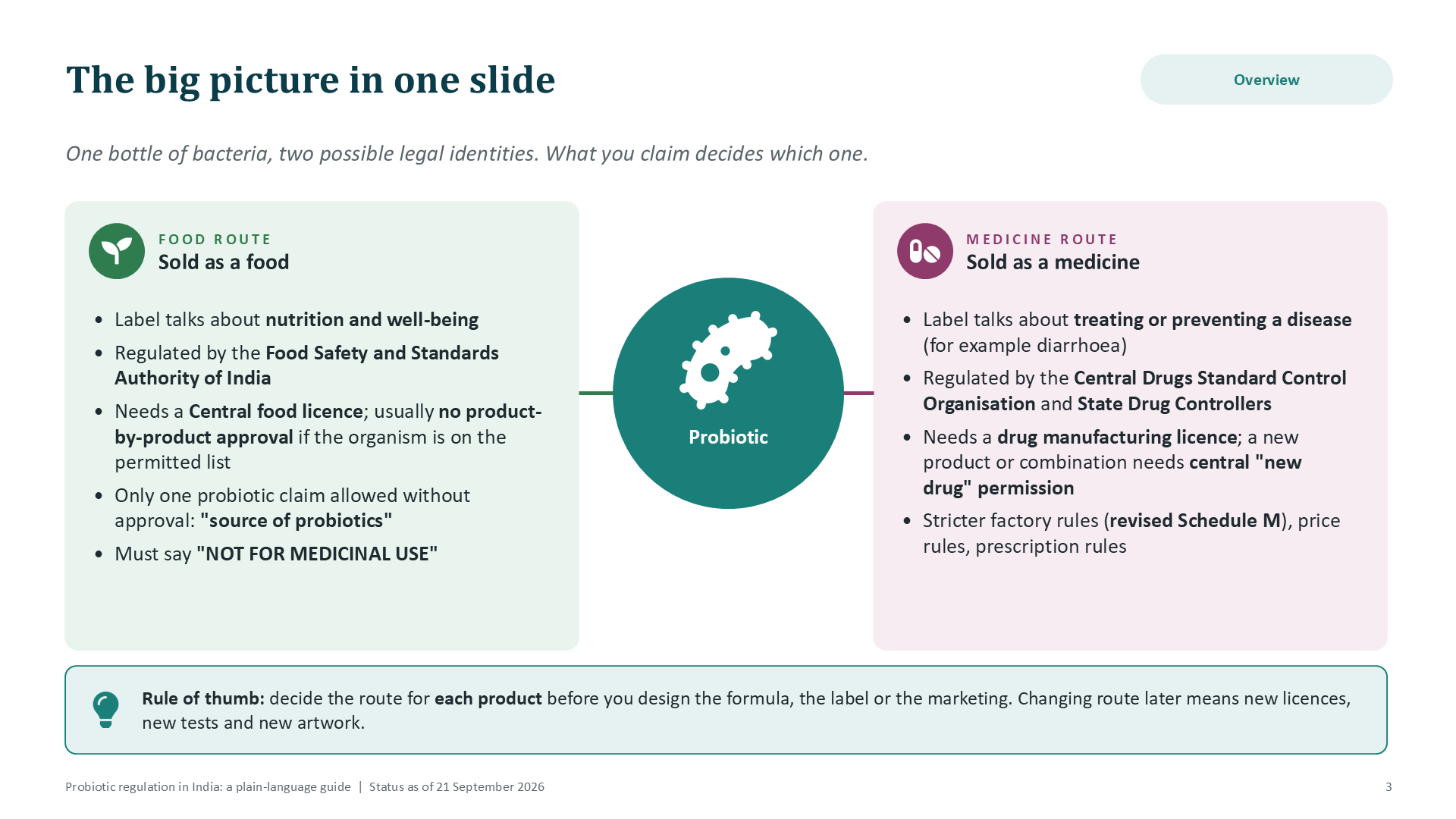
A probiotic can be sold in India as a food or as a medicine, and what the label claims decides which. The food route runs through the Food Safety and Standards Authority of India (FSSAI); the medicine route runs through the Central Drugs Standard Control Organisation (CDSCO) and the State Drug Controllers, with stricter factory rules under revised Schedule M. Deciding the route for each product comes first, because changing it later means new licences, new tests and new artwork.
This guide explains probiotic regulation in plain language, as a first-day briefing for the regulatory team of a company working with probiotics. It works through the 18 domains of an India regulatory checklist: classification, laws, local presence, licences, product approval, factory rules, testing and stability, safety, ingredients, additives and excipients, labels, claims, imports and import papers, certifications, selling, after-sale duties, trade marks and fees. Step-by-step journeys cover starting a factory, launching a probiotic medicine, owning a brand, distributing, importing, exporting and entering India as a foreign company.
It closes with what changed from 2025 to September 2026, including the separation of facilities and dosage formats, labelling and manufacturing changes, recent enforcement actions and proposals under contemplation, followed by frequently asked questions and the main sources. It reflects the position as of 21 September 2026. It explains regulations in simple terms for learning and is not legal advice: confirm with the regulators or Indian counsel before acting.
A look inside
3 of the 78 slides.
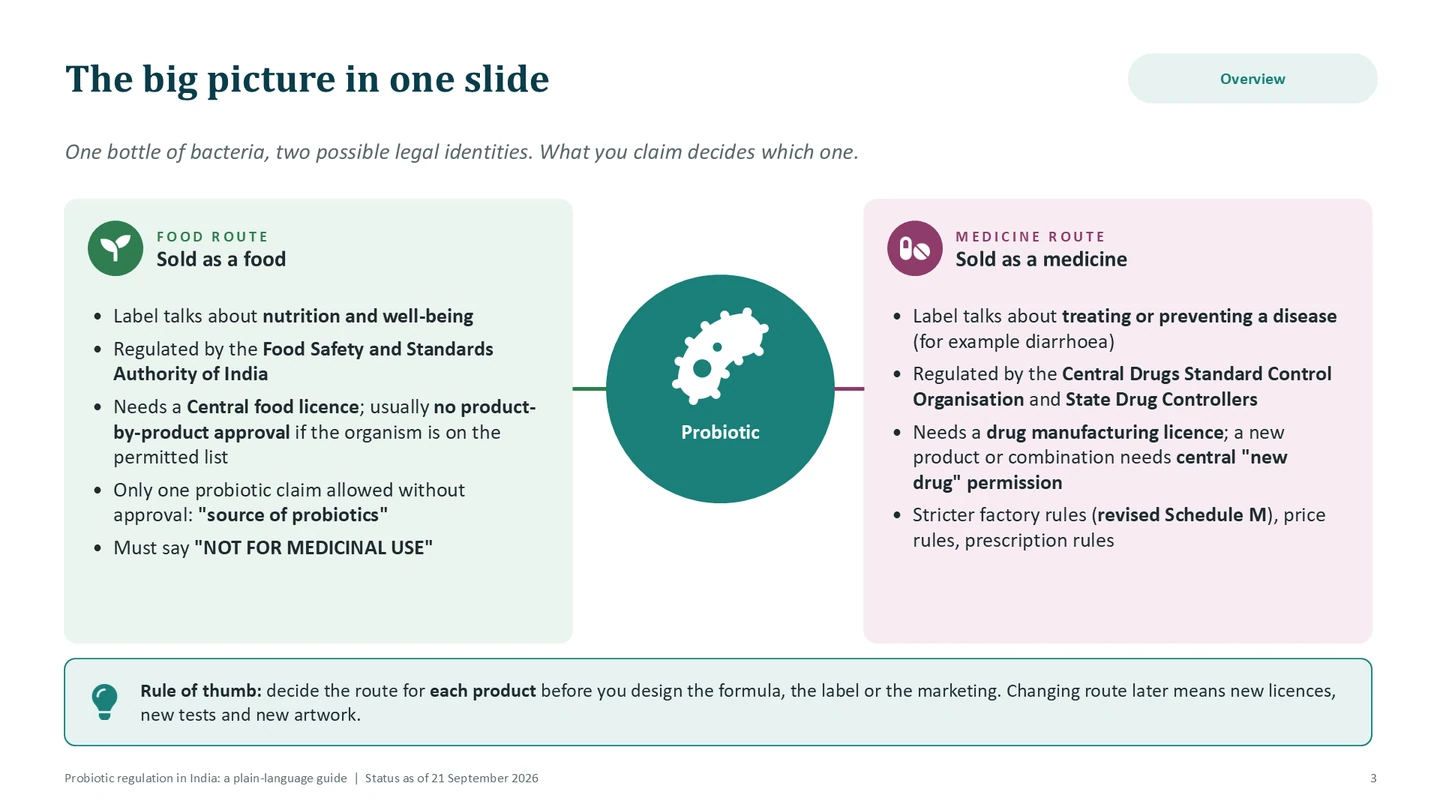
The big picture: one probiotic, two possible legal identities. 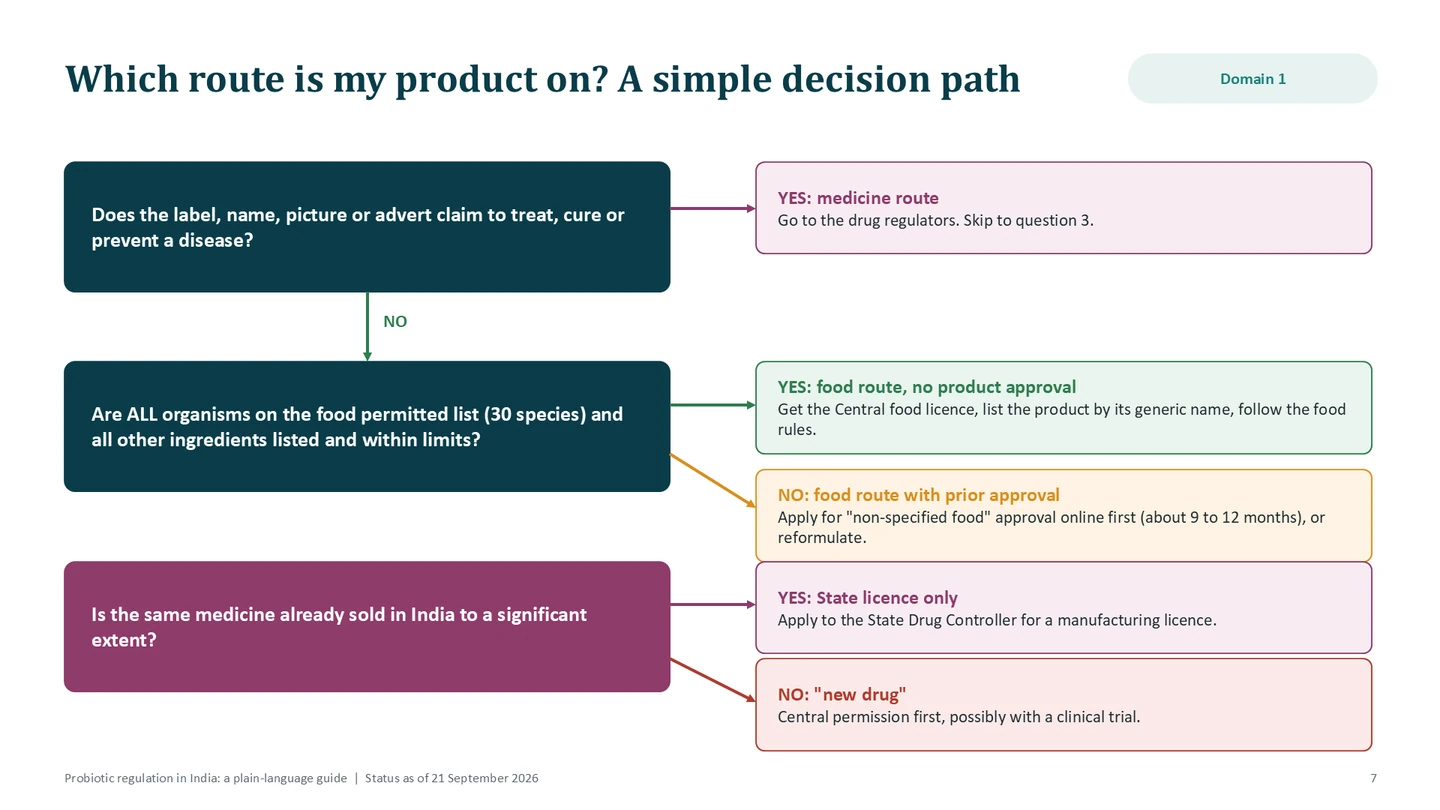
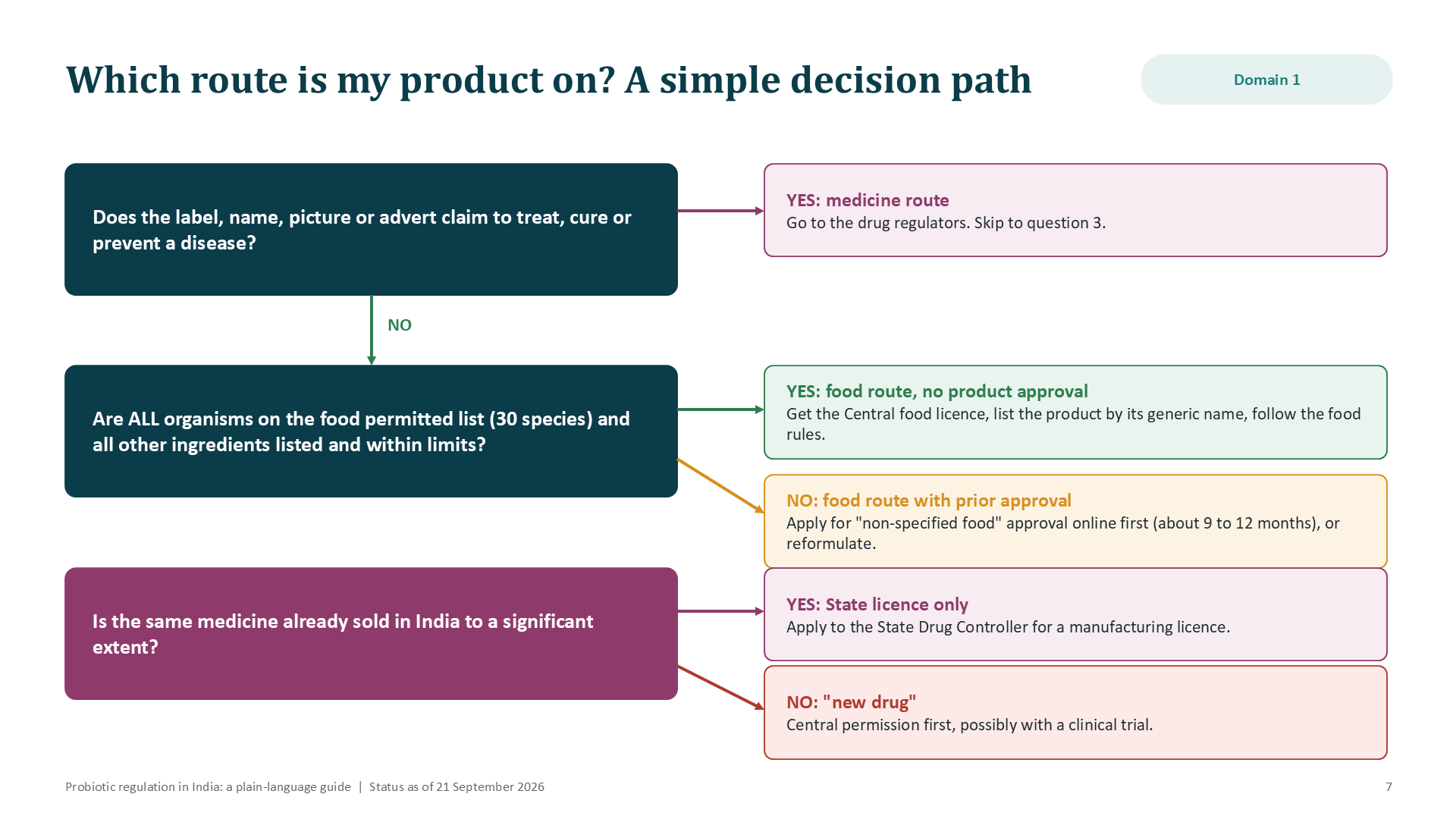
Which route is a product on? A simple decision path. 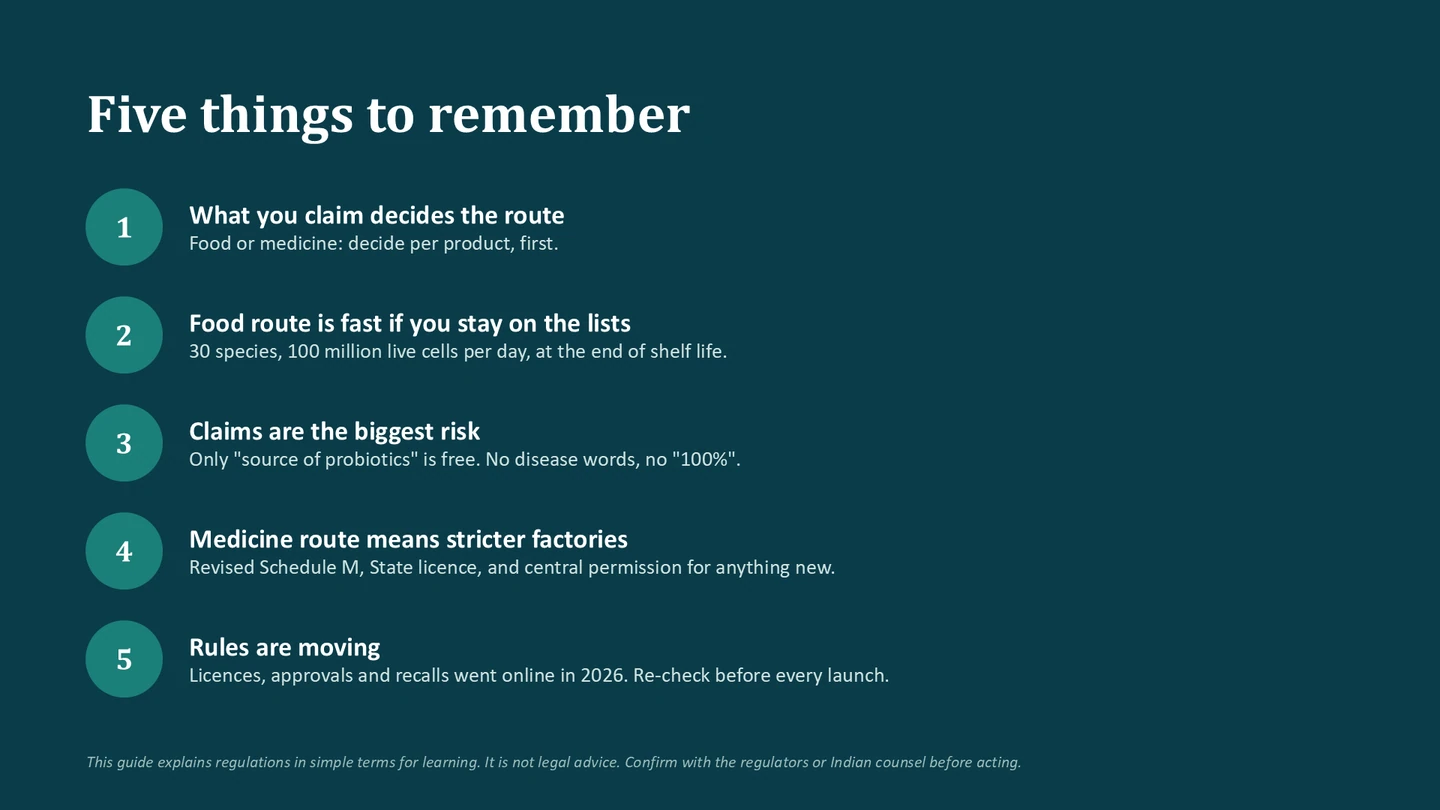
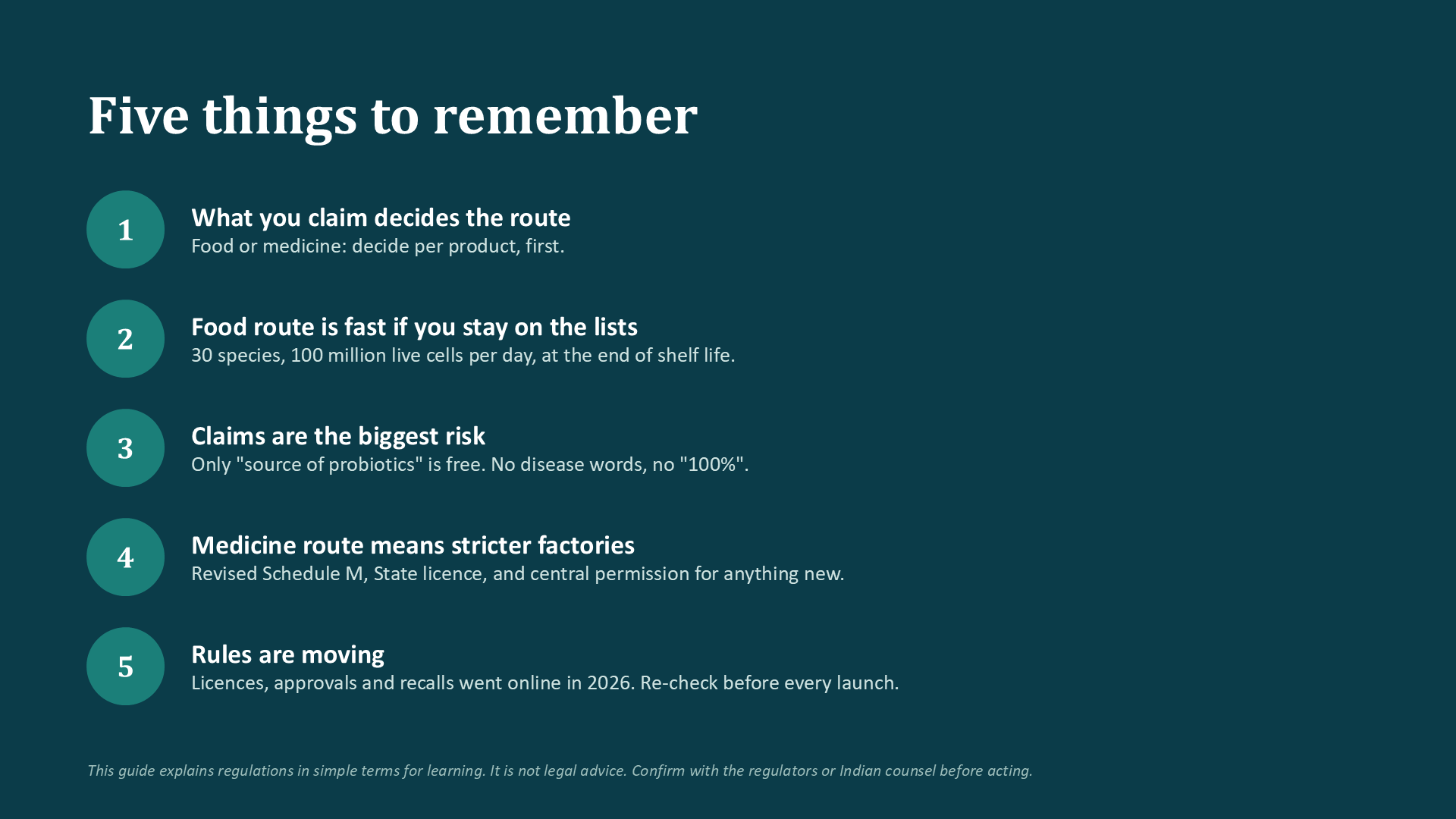
Five things to remember.